He ruled for 25 years, between two of ancient India’s most famous emperors, and asked a Greek king for wine, figs, and a philosopher. This article covers Bindusara, the Mauryan ruler history mostly skips over.

Timeline
- c. 297 BCE: Bindusara succeeds his father Chandragupta Maurya as the second Mauryan emperor.
- During his reign: Bindusara exchanges letters with the Greek king Antiochus I, requesting sweet wine, figs, and a philosopher.
- During his reign: The Seleucid ambassador Deimachus resides at Bindusara’s court, succeeding Megasthenes.
- c. 273 BCE: Bindusara dies. His son Ashoka succeeds him.
A Reign With No Voice of Its Own Need to Know
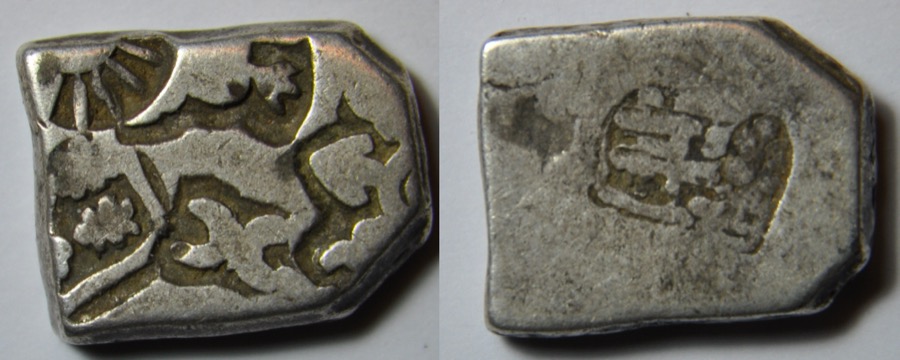
- Bindusara was the second Mauryan emperor, ruling roughly 297 to 273 BCE, between his father Chandragupta Maurya and his son Ashoka. Ancient sources disagree on the exact length of his reign; some give 25 years, others 28.
- No inscription written in his own name has ever been found. This sets him apart from his son Ashoka, whose edicts survive across the subcontinent.
- Almost everything known about Bindusara comes from sources written well after his death: later Buddhist texts such as the Mahavamsa and the Divyavadana, Jain tradition, and the accounts of Greek visitors to India.
- Greek writers give him two versions of the same title. Strabo calls him Allitrochades; Athenaeus calls him Amitrochates. Both are thought to render the Sanskrit Amitraghata, meaning “slayer of enemies.”
A Court in Touch With the Greek World Good to Know
- Bindusara’s father Chandragupta Maurya had hosted the Greek ambassador Megasthenes, sent by the Seleucid king Seleucus I. Read more: AncHist0013 — The Mauryan Empire: Chandragupta Maurya.
- Bindusara continued this diplomatic tie. Seleucus I’s son and successor, Antiochus I, sent a new ambassador, Deimachus, to Bindusara’s court at Pataliputra.
- A Greek writer named Athenaeus, quoting an earlier source, records that Bindusara asked Antiochus I to send sweet wine, dried figs, and a sophist, meaning a philosopher.
- Antiochus I reportedly agreed to send the wine and figs. He said Greek law forbade a philosopher from being sold, so he could not send one.
- Bindusara’s court is also linked to the Ajivika ascetic sect, alongside the Brahmanical tradition already followed by the Mauryan dynasty. Later tradition names an Ajivika ascetic at his court who predicted his son Ashoka’s future rule.
Test Yourself

A Contested Frontier and a Fog of Succession Great to Know
- Older accounts often say Bindusara conquered the Deccan and pushed Mauryan territory into the south. This claim is genuinely contested among historians today.
- No inscription credits Bindusara himself with a southern conquest. Some historians argue he made no major new conquests at all, simply holding what his father had won. Others think Mauryan influence reached close to modern Karnataka by the end of his reign, with southern kingdoms acknowledging Mauryan authority rather than being directly annexed.
- Before becoming emperor, Ashoka served as one of Bindusara’s provincial viceroys. Later Buddhist texts disagree on exactly where. The Mahavamsa places him at Ujjain. Other texts, including the Divyavadana, instead describe Ashoka being sent to put down a revolt at Taxila, far to the northwest. These are two separate traditions, not the same story told twice.
- Bindusara’s own succession is recorded only through later legends that contradict each other. One tradition has Ashoka killing dozens of brothers to secure the throne. Another has a minister maneuvering in Ashoka’s favour. A third simply has Bindusara crowning Ashoka himself before he died. No single account can be treated as reliable history.
- For his son’s own well-documented reign, see AncHist0014 — Ashoka and His Edicts.
Beyond the answer
Browse all ancient-indian-history topics →
📚 Keep reading
The Magadha: Ancient India's Professional ChroniclersMalavikagnimitram: Kalidasa's Sunga-Era Love StoryThe Dhauli Rock-Cut Elephant: India's Earliest Buddhist SculptureAncHist0124 — The Araghatta Irrigation DeviceAncHist0123 — The Amaravati Stupa❓ Practice this topic
🎲 Take a Ancient Indian History Quiz
Leave a Reply