Three separate events in one man’s life, centuries apart, are all said to have happened on exactly the same date. Buddhists call this the Triple Blessed Day, and the United Nations now marks it too.

Timeline
- 6th century BCE: Tradition holds that Buddha’s birth, enlightenment, and death all fell on this same date.
- 1999: The UN General Assembly formally recognises the Day of Vesak, by Resolution 54/115.
- Every year: The day is marked at UN Headquarters in New York and at UN offices worldwide.
- 1 May 2026: Buddha Purnima falls on a Friday, the full moon day of Vaishakha.
A Single Day, Three Sacred Events Need to Know
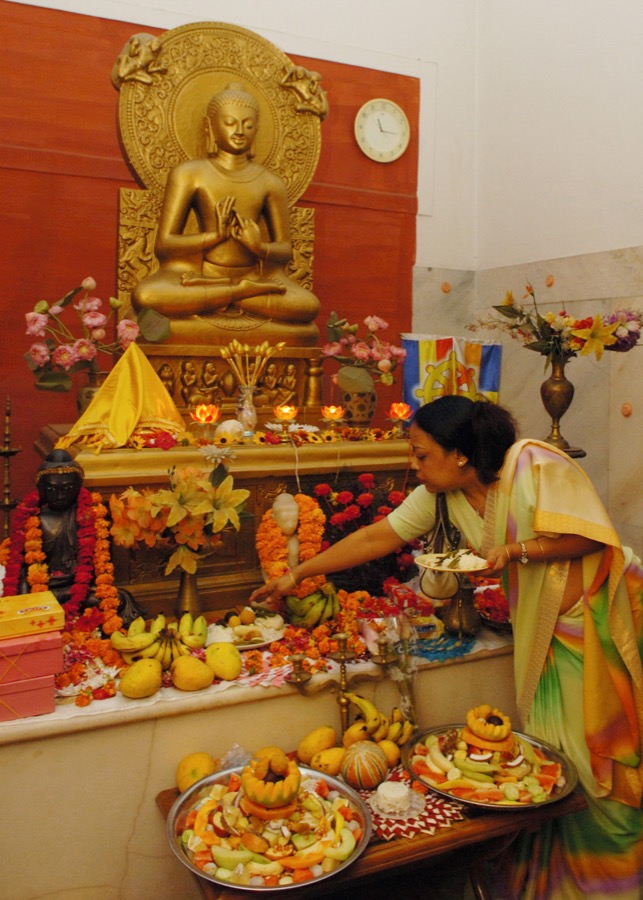
- Buddha Purnima, also called Vesak, falls on the full moon of Vaishakha, a month in the Hindu calendar.
- It is known as the “Triple Blessed Day,” marking three separate events in Buddha’s life.
- Tradition holds that his birth, his enlightenment, and his death all occurred on this same date.
- His full life story, including where each event took place, is covered in a dedicated companion article.
- Not every Buddhist tradition agrees on this. Theravada Buddhism follows this “Triple Blessed” reading most closely.
- The name Vesak comes from “Vesakha,” the Pali name for the month.
How It Is Celebrated Good to Know
- Devotees light lamps, candles, and lanterns, symbolising the Buddha’s wisdom dispelling ignorance.
- Many wear white clothing on this day, as a sign of purity.
- Temples hold processions, chant sacred verses, and bathe statues of the Buddha as an act of purification.
- Devotees give alms and donate food to monks and to those in need.
- Releasing caged animals is a traditional gesture of compassion, though this is now approached with more care.
- Bodh Gaya, where Buddha attained enlightenment, is a major gathering point for pilgrims on this day.
- Its Mahabodhi Temple, examined in its own dedicated article, draws especially large crowds.
Test Yourself

A Day the United Nations Recognises Great to Know
- In 1999, the UN General Assembly passed Resolution 54/115, recognising the Day of Vesak internationally.
- This recognised Buddhism’s contribution to human spirituality over more than two and a half millennia.
- The day is now commemorated each year at UN Headquarters in New York, and at UN offices worldwide.
- In 2026, Buddha Purnima falls on Friday, 1 May.
- It is a gazetted public holiday in India, and in several other Asian countries as well.
- Buddhism’s later spread far beyond India, and its present-day global reach, are covered in a dedicated timeline piece.
Legacy
- Buddha Purnima remains India’s most direct living link to the Buddha’s own life and teaching.
- Its global reach reflects Buddhism’s spread across Asia over more than two thousand years.
- UN recognition has helped keep the day visible well beyond its Buddhist-majority countries of origin.
Beyond the answer
Browse all art-and-culture topics →
📚 Keep reading
Governors-General and Viceroys of India (1773-1947)ArtnCulture0081 — Mudras of the Buddha: Symbolic Hand Gestures ExplainedArtnCulture0067 — MaitreyaAncHist0010 — Buddhism: The Buddha's Life and CouncilsAncHist0074 — The Sanchi Stupa❓ Practice this topic
In the Samudra Manthan story, what does Vishnu take the form of to distribute Amrita only among the gods?Who is the architect of the Ram Temple constructed at Ayodhya?The Dilwara Jain Temples are located at which hill site in Rajasthan?Which of India's three national arts academies was established first?🎲 Take a Art And Culture Quiz
Leave a Reply