In January 1960, Andhra Pradesh got a new Chief Minister. He was also something India had never had before: a Dalit leading any state government at all. Damodaram Sanjivayya went on to break that same barrier again, at the very top of the Congress party itself.
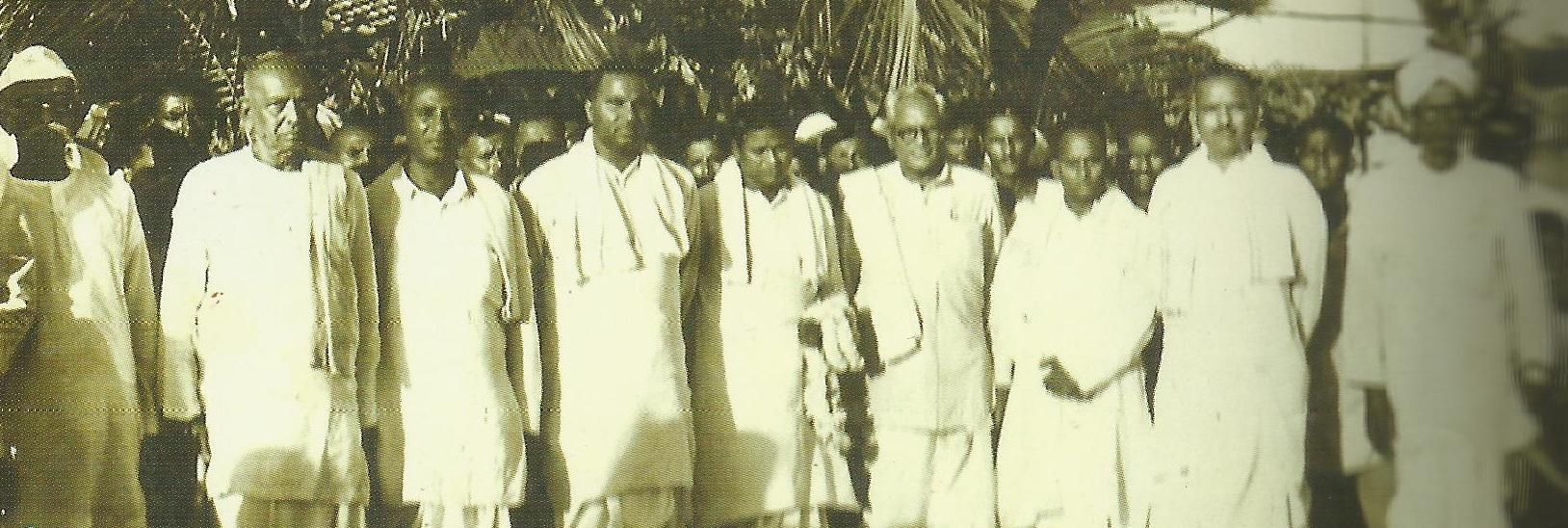
Timeline
- 14 February 1921: Damodaram Sanjivayya is born in Peddapadu village, Kurnool district, into a Mala (Scheduled Caste) family.
- 1948: He earns his LLB from Madras Law College. He had joined the freedom movement as a student.
- 1950-1952: He serves as a minister in Madras State, and as a member of the provisional parliament.
- 11 January 1960: He becomes Andhra Pradesh’s second Chief Minister, and India’s first Dalit Chief Minister of any state.
- June 1962: He is elected AICC President, the first Dalit to hold the post.
- 9 June 1964: He is appointed Union Minister of Labour and Employment, under PM Lal Bahadur Shastri.
- May 1971: He is elected AICC President for a second time.
- 8 May 1972: He dies of a heart attack in New Delhi, aged 51.
Breaking the First BarrierNeed to Know
- Damodaram Sanjivayya (1921-1972) was India’s first Dalit Chief Minister of any state.
- He served as Andhra Pradesh’s second Chief Minister, from 11 January 1960 to 12 March 1962.
- He was born into a Mala family, a Scheduled Caste community, in Peddapadu village, Kurnool district.
- He was also the first Dalit to become All India Congress Committee (AICC) President. He held the post twice: June 1962 to January 1964, and from May 1971 until his death.
- He served as Union Minister of Labour and Employment, from June 1964 to January 1966, under PM Lal Bahadur Shastri.
- He earned his LLB from Madras Law College in 1948. He had taken part in the freedom movement as a student.
- He died of a heart attack in New Delhi, on 8 May 1972, aged 51.
Governing and OrganisingGood to Know
- As Chief Minister, he introduced a pension system for widows and elderly citizens, one of the earliest such schemes in India.
- In 1960, his government also passed land reform laws. These redistributed surplus land from large landowners to the poor.
- He founded the Lalitha Kala Akademi, a state fine arts academy, and set up an Anti-Corruption Bureau.
- His government completed major irrigation projects, including the Gajuladinne and Pulichintala projects.
- Before becoming Chief Minister, he served as a minister in the composite Madras State. He was also a member of the provisional parliament, from 1950 to 1952.
- He married Krishnaveni, a fellow Dalit and a teacher, in 1950. They had no children.
- He also wrote literary articles and poetry, in Telugu, and later a book on labour and industrial development, published in 1970.
Test Yourself

Lasting RecognitionGreat to Know
- The Damodaram Sanjivayya National Law University, in Visakhapatnam, is named in his honour.
- Sanjeevaiah Park, on the banks of Hyderabad’s Hussain Sagar lake, holds his grave, and is also named for him.
- A postage stamp commemorating him was issued on 14 February 2008, his birth anniversary.
- He broke the same barrier twice over. First as a state Chief Minister, then as the leader of the Congress party itself, at the national level.
- His rise came well before reservation in political office became a major national debate. He reached the top through party politics, not a reserved seat or post.
- His land reform and old-age pension work came years before either idea became standard national policy.
Beyond the answer
Browse all india-after-independence topics →
📚 Keep reading
ModHist0275 — N.T. Rama Rao (NTR)GK0002 — India's Notable FirstsPolity0326 — Govind Ballabh Pant: Uttar Pradesh's First Chief MinisterModHist0234 — Dakshayani VelayudhanModHist0094 — Caste Consciousness Movements, 19th Century❓ Practice this topic
Ajit Singh's son, Jayant Chaudhary, now leads the Rashtriya Lok Dal as part of which alliance's government, one that publicly favours keeping UP united?Uttarakhand, Jharkhand, and Chhattisgarh, often cited by Harit Pradesh's supporters as evidence smaller states can work, were all created in which year?Under India's Constitution, why did the UP Legislative Assembly's 2011 resolution to split the state never take effect?In 1997, Ajit Singh set up which organisation to build public support for a separate western-UP state?🎲 Take a India After Independence Quiz
Leave a Reply