Before the Company controlled all of India, it had to defeat India’s other major powers, one by one. Three campaigns mattered most.
 MCQ Questions
Modern History
The East India Company’s Wars
Rarely fighting alone — allying with rival rulers against whoever threatened most
1767–1799
Anglo-Mysore Wars
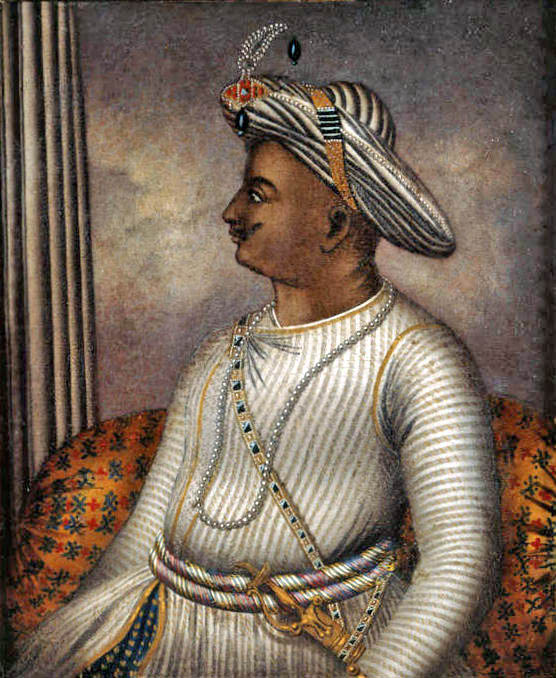
Four wars against Haidar Ali and Tipu Sultan; Tipu dies defending Seringapatam in 1799.
1775–1818
Anglo-Maratha Wars
Three wars break the Maratha Confederacy, the largest obstacle to Company expansion.
1845–1849
Anglo-Sikh Wars
After Ranjit Singh’s death weakens Sikh authority, two wars end with Punjab’s annexation.
1849
Paramountcy Complete
With Punjab annexed, no major independent Indian power remains to challenge Company rule.
✊ Must Know
1. Four Anglo-Mysore Wars
- Fact The Company fought four Anglo-Mysore Wars between 1767 and 1799, first against Haidar Ali and then his son Tipu Sultan.
2. Tipu Sultan’s death, 1799
- Fact Tipu Sultan died defending his capital, Seringapatam, in the Fourth Anglo-Mysore War, 1799. Mysore then came under Company control.
3. Three Anglo-Maratha Wars
- Fact The Company fought three Anglo-Maratha Wars between 1775 and 1818. These wars broke the power of the Maratha Confederacy.
4. The end of Maratha resistance
- Fact The Third Anglo-Maratha War, ending in 1818, removed the last major Indian resistance to Company expansion in central India.
5. Two Anglo-Sikh Wars
- Fact Two Anglo-Sikh Wars followed, in 1845–46 and 1848–49. The Company annexed Punjab after the second war.
📘 Good to Know
1. Plassey and Buxar came first
- Context The Battles of Plassey (1757) and Buxar (1764) had already secured Bengal for the Company. These later wars expanded that base westward.
2. The Marathas, the biggest obstacle
- Analysis The Marathas were the single largest obstacle to Company expansion in central and western India. That is why it took three separate wars to defeat them.
3. Ranjit Singh’s Sikh state
- Fact Maharaja Ranjit Singh had built a powerful, unified Sikh state in Punjab. His death in 1839 weakened central authority there.
4. A weakened Punjab, an open door
- Analysis Weakened Sikh authority after 1839 opened the door to renewed Company pressure, leading directly to the two Anglo-Sikh Wars.
Test Yourself

🏆 Great to Know
1. A pattern of shifting alliances
- Pattern These wars share a pattern. The Company rarely fought alone. It allied with rival Indian rulers against whichever power threatened it most at the time.
2. Tipu Sultan, remembered differently
- Debate Tipu Sultan is remembered differently across sources. Some view him as an early anti-colonial resister. Others stress his own expansionist ambitions toward neighbouring states.
3. Paramountcy completed, 1849
- Legacy Punjab’s 1849 annexation completed British paramountcy over the subcontinent. After it, no major independent Indian power remained to challenge Company rule.
📝 Previous Year Questions
UPSC Mains 2022, GS Paper I, Q2: Why EIC’s Sepoy Armies Won
- Mains PYQ Asked why East India Company armies, mostly Indian soldiers, won consistently against larger, better-equipped Indian forces.
- View this Mains question →
Beyond the answer
Browse all modern-indian-history topics →
📚 Keep reading
Lord Wellesley: The Subsidiary Alliance and the Conquest of IndiaModHist0073 — Mysore Under Haider Ali and Tipu SultanLord Cornwallis: The Permanent Settlement and the Cornwallis CodeModHist0005 — The East India Company Becomes a Political PowerRobert Clive: The Foundation of British Rule in India❓ Practice this topic
The Rakhmabai case of 1884 revolved around which issue?Why did the early nationalists oppose the Council Act of 1892?The Durand Line, drawn in 1893, is the border betweenThe Age of Consent Act of 1891, passed under Lord Lansdowne,🎲 Take a Modern Indian History Quiz
Leave a Reply