Bahadur Shah Zafar gets remembered as the face of the 1857 revolt in Delhi. The man actually commanding its army was someone else entirely.
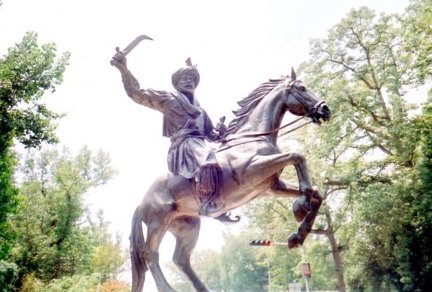
Must KnowNeed to Know
- Bakht Khan (1797 – 1859) was born in Bijnor, in the Rohilkhand region, to a Pashtun family.
- He served nearly forty years as a Subedar in the Company’s Bengal Horse Artillery, including in the First Anglo-Afghan War.
- He arrived in Delhi on 1 July 1857, leading Rohilla sepoys from Bareilly, during the 1857 revolt.
- Emperor Bahadur Shah Zafar gave him the title Saheb-e-Alam Bahadur, making him the effective commander-in-chief of the rebel forces.
- On 25 August 1857, his forces were decisively defeated at the Battle of Najafgarh, by British Brigadier John Nicholson.
- British forces stormed Kashmiri Gate on 14 September 1857. Bahadur Shah took refuge at Humayun’s Tomb and was captured there on 20 September, reportedly against Bakht Khan’s own advice to keep fighting.
Good to KnowGood to Know
- To manage the rebellion while working around a largely figurehead emperor, he set up a Court of Administration, with members elected by the army and government departments.
- He was distantly related, through his mother’s side, to the deposed ruling house of Oudh.
- After Delhi fell, he didn’t surrender. He continued fighting alongside rebel forces at Lucknow and Shahjahanpur.
- Most accounts, including Wikipedia’s, say he died in 1859 in the Terai plains of Nepal, from wounds suffered while still resisting the British. A separate Pashtun tradition instead places his death and burial at Nanser, in present-day Buner district, Pakistan.
Test Yourself

Great to KnowGreat to Know
- His story complicates the simple version of 1857 that centres entirely on Bahadur Shah Zafar. Real military command rested with professional soldiers like Bakht Khan, not with the Mughal court itself.
- His defeat at Najafgarh is a useful counterweight to purely triumphant retellings of 1857. The revolt included real, costly military failures, not just moral victories.
- His continued resistance after Delhi’s fall, all the way to his death in 1859, shows the revolt didn’t end cleanly with the recapture of the capital.
Beyond the answer
Browse all modern-indian-history topics →
📚 Keep reading
Lord Canning: The First Viceroy of IndiaLord Dalhousie: The Doctrine of Lapse, Railways and AnnexationMedHist0078 — Bahadur Shah I: The Oldest Man Ever Crowned a Mughal EmperorModHist0171 — Khan Bahadur Khan: The Self-Declared Nawab of RohilkhandModHist0058 — 1857: Causes, Course and Consequences❓ Practice this topic
In Parliament in 1963, Ram Manohar Lohia sharpened his critique of Congress-era poverty with a famous claim. What did he say?In which year did Ram Manohar Lohia found the Socialist Party?Ram Manohar Lohia evaded arrest for nearly two years after going underground in 1942. In which year was he finally arrested?Ram Manohar Lohia helped organise a secret radio station broadcasting from hidden transmitters during the Quit India Movement. What was it called?🎲 Take a Modern Indian History Quiz
Leave a Reply