In October 1824, an Indian queen’s army killed a British collector in battle and took two officers hostage. This happened 33 years before the Revolt of 1857, the uprising usually taught as India’s first major armed resistance to British rule.
Must KnowNeed to Know
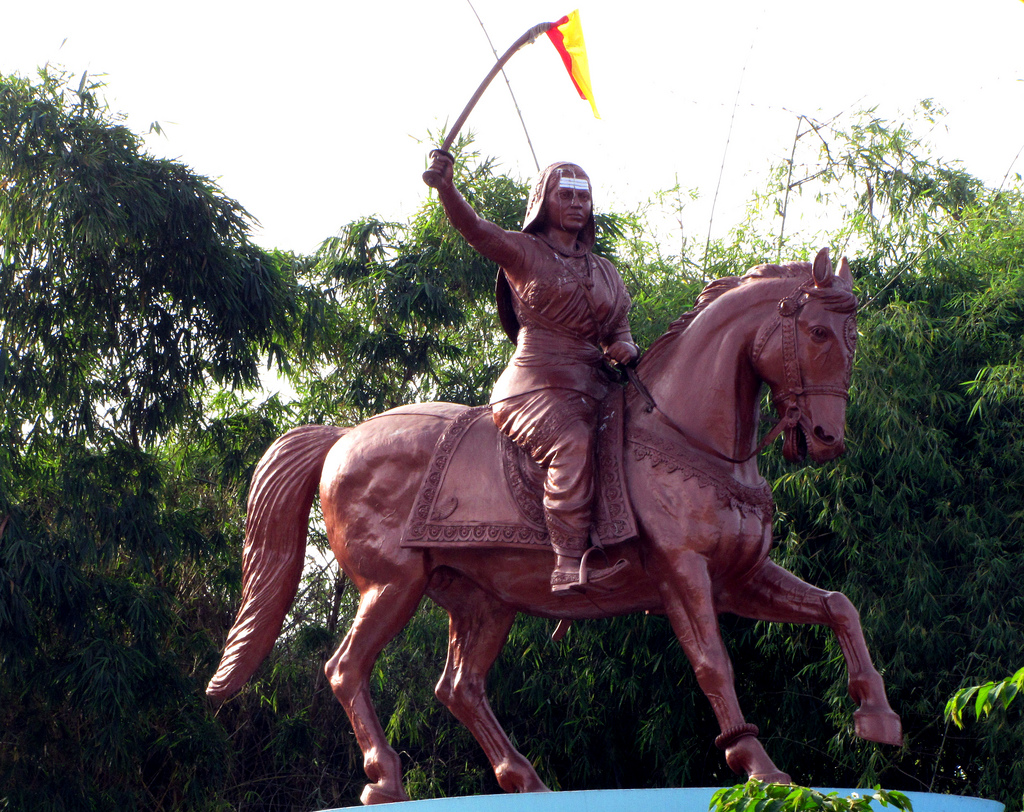
- Kittur Chennamma (14 November 1778 – 21 February 1829) was the Rani of Kittur, a princely state in present-day Karnataka. She was born in Kakati, Belagavi district.
- She married Raja Mallasarja of Kittur at age 15. He died in 1816, and her biological son died in 1824.
- After her son’s death, she adopted Shivalingappa in 1824 and named him her heir. The British East India Company refused to recognise the adoption and moved to annex Kittur.
- In October 1824, her forces won the first battle against the British, killing collector St. John Thackeray and taking two officers hostage.
- In December 1824, a much larger British force returned and captured Kittur. Chennamma was taken prisoner.
- She died in captivity at Bailhongal Fort on 21 February 1829, having preceded the Revolt of 1857 by 33 years.
Good to KnowGood to Know
- Her army chief in both battles was Sangolli Rayanna, who continued guerrilla resistance against the British after her capture. He was hanged on 26 January 1831, betrayed to the British by local landlords.
- The British annexation attempt, triggered by their refusal to recognise her adopted heir, anticipated the formal Doctrine of Lapse. Lord Dalhousie only introduced that policy in 1848. See ModHist0056 — Subsidiary Alliance and the Doctrine of Lapse.
- Her rebellion is one of the earliest armed uprisings against East India Company rule, well before the more widely taught Revolt of 1857. See ModHist0058 — The Revolt of 1857.
- India issued a postage stamp honouring her on 23 October 1977. A statue of her was unveiled at Parliament House, New Delhi, on 11 September 2007.
Test Yourself

Great to KnowGreat to Know
- Chennamma’s rebellion and the Revolt of 1857 shared a root cause: British refusal to recognise Indian succession customs. Her case shows that grievance was already provoking armed resistance decades earlier, not just in 1857.
- Two battles in two months show a real military contest, not a token protest. Her forces actually defeated the British once before being overwhelmed by reinforcements the second time.
- The British kept using Doctrine-of-Lapse-style annexations for decades after her defeat. Her one regional victory over the logic didn’t stop them from applying it elsewhere, including at Jhansi in 1854.
Beyond the answer
Browse all modern-indian-history topics →
📚 Keep reading
Lord Canning: The First Viceroy of IndiaLord Dalhousie: The Doctrine of Lapse, Railways and AnnexationGovernors-General and Viceroys of India (1773-1947)ModHist0190 — Sangolli RayannaLord Wellesley: The Subsidiary Alliance and the Conquest of India❓ Practice this topic
In Parliament in 1963, Ram Manohar Lohia sharpened his critique of Congress-era poverty with a famous claim. What did he say?In which year did Ram Manohar Lohia found the Socialist Party?Ram Manohar Lohia evaded arrest for nearly two years after going underground in 1942. In which year was he finally arrested?Ram Manohar Lohia helped organise a secret radio station broadcasting from hidden transmitters during the Quit India Movement. What was it called?🎲 Take a Modern Indian History Quiz
Leave a Reply