A former soldier organised a protest march in a small Gorakhpur town. It ended with a police station in flames, 22 policemen dead, and Gandhi calling off a nationwide movement single-handedly.
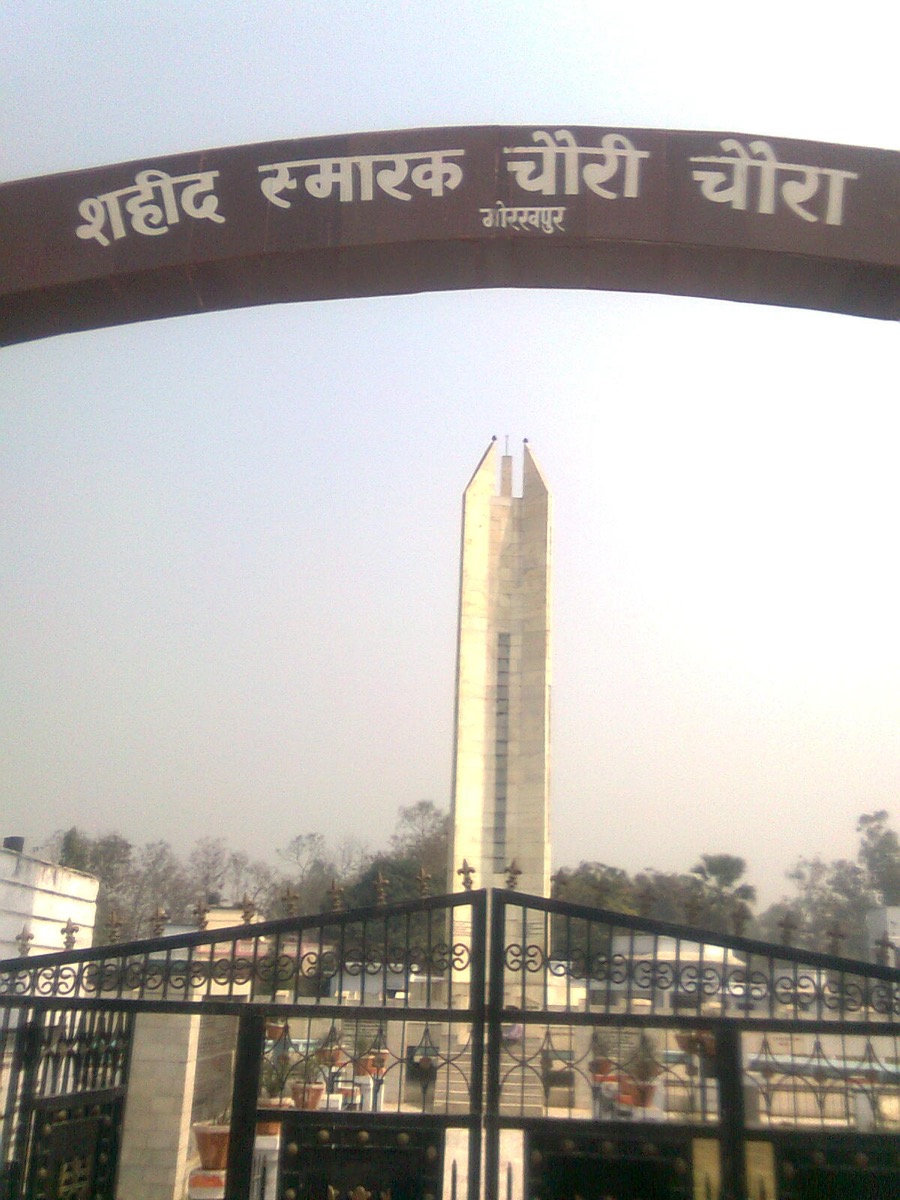
 mcqquestion.com
Modern History · ModHist0207
Bhagwan Ahir
Chief organiser of the Chauri Chaura incident, 1922
Early life
Born in Gorakhpur district, UP, to landlord Ram Nath Ahir; serves overseas in the British Indian Army during WWI.
2 Feb 1922
Leads a protest against high food prices and liquor sales, at Gauri Bazaar.
4 Feb 1922
Organises the Chauri Chaura march; the crowd burns down the police station.
Jul 1923
Hanged, one of 19 executed for the incident.
One Incident, One National Decision
The violence at Chauri Chaura led Gandhi to suspend the entire Non-Cooperation Movement nationwide, on 12 February 1922, viewing it as a failure of his own non-violence principles.
Timeline
- Early life: Bhagwan Ahir is born in Gorakhpur district, Uttar Pradesh, to landlord Ram Nath Ahir. He later serves overseas in the British Indian Army during the First World War, though the exact duration and posting are not firmly documented.
- 2 February 1922: He leads a protest against high food prices and liquor sales, at Gauri Bazaar.
- 4 February 1922: As chief organiser, he leads a march of about 2,000-2,500 protesters at Chauri Chaura. Police open fire, killing three. The crowd sets the local police station ablaze, killing 22 policemen.
- 12 February 1922: Gandhi suspends the Non-Cooperation Movement nationwide, in response to the incident.
- July 1923: Ahir is hanged, one of 19 people executed for the incident.
The March That Turned Violent Need to Know
Ahir and the Incident
The Incident
- Origins Bhagwan Ahir was born in Gorakhpur district, Uttar Pradesh, to a landlord family. His father was Ram Nath Ahir.
- Military Service He served overseas in the British Indian Army during the First World War. Sources differ on the exact length of his service and his specific posting, so no precise figure is stated here.
- Chief Organiser He organised the protest march on 4 February 1922, at Chauri Chaura, Gorakhpur district. See ModHist0325 — The Chauri Chaura Incident, 1922 for the full event.
- The Clash When police opened fire, killing three protesters, the crowd set the local police station ablaze, killing 22 policemen.
- Gandhi’s Response The incident led Gandhi to suspend the Non-Cooperation Movement nationwide, on 12 February 1922.
- Execution Ahir was sentenced to death, and hanged in July 1923, one of 19 people executed for the incident.
The Trial and Executions Good to Know
Trial and Defence
Trial and Sentencing
- 2 February 1922 Two days before the main incident, he led a protest at Gauri Bazaar, targeting high food prices and liquor sales.
- 4 February March About 2,000 to 2,500 protesters gathered for the march, chanting anti-British slogans.
- Arrests 225 people were arrested and tried at the Gorakhpur Sessions Court, on charges of rioting and arson.
- Defence Madan Mohan Malaviya, together with Krishna Kant Malaviya, appealed the sentences at the Allahabad High Court. It delivered its final judgments on 30 April 1923.
- Executions The 19 condemned, including Ahir, were hanged between 2 and 11 July 1923.
Test Yourself

A Single Incident, a National Decision Great to Know
Why It Mattered Nationally
National Consequences
- Gandhi’s Principle Gandhi viewed the violence as a failure of his own non-violence principles. He took personal responsibility for suspending the movement nationwide.
- A Redirecting Moment Chauri Chaura remains one of the clearest examples of how a single local incident could redirect an entire national movement.
- Controversy Gandhi’s suspension was controversial among other nationalist leaders. Some felt it wasted revolutionary momentum built up over the previous two years.
- Military Background Ahir, a former British Indian Army soldier, is a reminder that many freedom-movement participants had military training, not just civilian political experience.
- Wider Movement See ModHist0062 — Khilafat and Non-Cooperation Movements. It covers the incident’s role in the wider movement, but not Ahir himself as an individual.
- The Legal Sequel The Chauri Chaura trial had a dramatic legal sequel. Madan Mohan Malaviya, with Krishna Kant Malaviya, argued the appeal that cut 172 death sentences down to 19. See Madan Mohan Malaviya: Mahamana for his wider life, and ModHist0325 — The Chauri Chaura Incident, 1922 for the trial in full.
Beyond the answer
Browse all modern-indian-history topics →
📚 Keep reading
ModHist0325 — The Chauri Chaura Incident, 1922ModHist0062 — Khilafat and Non-Cooperation MovementsModHist0318 — Madan Mohan Malaviya: MahamanaModHist0323 — The Non-Cooperation MovementUPSC CSP 2025 — General Studies Paper I (Full Question Paper)❓ Practice this topic
The Universities Act of 1904, which tightened government control over Indian universities, was passed during whose Viceroyalty?The Swadeshi Movement of 1905 was started in direct response to which event?With reference to the Swadeshi Movement, consider the following statements: 1. It contributed to the revival of indigenous artisan crafts and industries. 2. The National Council of Education was established as a part of the Swadeshi Movement.Which of the following are true in the context of the Swadeshi Movement in 1905? 1. Massive demonstrations were held in Bengal. 2. Hartal was observed in Calcutta. 3. The movement was initiated by the moderates, but was taken over by the revolutionary nationalists at a later stage.🎲 Take a Modern Indian History Quiz
Leave a Reply