The Surat Split, 1907: Moderates and Extremists Break Apart
In December 1907, a Congress session in Surat ended in thrown shoes and broken chairs. When the dust settled, the party had split in two.
This lesson follows the split from its ideological roots to the shoving match on stage, and the decade of division that followed.
What were the two strands of nationalism that collided at Surat?
Moderates wanted gradual reform through petitions; Extremists wanted direct action against British rule.
By 1907, the Indian National Congress held two sharply different views on how to win self-government.
Moderates, led by Gopal Krishna Gokhale, favoured gradual reform through petitions, speeches, and constitutional methods within the British system.
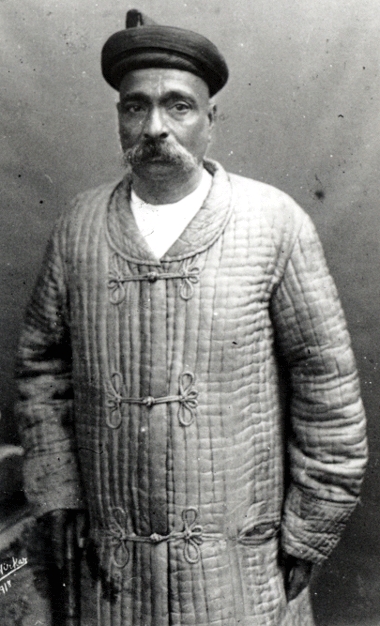
Extremists, led by Bal Gangadhar Tilak, wanted direct action instead: boycotts, swadeshi (buying only Indian-made goods), and mass mobilisation.
These were not new disagreements. They had simmered inside the Congress for years, but one event brought them to a head.
How did the partition of Bengal light the fuse?
The 1905 partition of Bengal gave Extremists a real grievance to organise around, sharpening their criticism of the Moderates’ slow methods.
The British partition of Bengal in 1905 split the province along religious lines, officially for administrative convenience.
Many Indians saw it instead as a deliberate attempt to weaken Bengali political unity by dividing Hindus and Muslims.
The partition triggered the Swadeshi movement, a mass boycott of British goods. It gave Extremists a real grievance to organise around, and sharpened their criticism of the Moderates’ slower, petition-based methods.
Why did the 1907 session move to Surat, Tilak’s own home turf?
Moving the session away from Nagpur, where Tilak had strong support, was itself a calculated move by the Moderates.
The Moderates moved the annual Congress session from Nagpur to Surat, reportedly fearing Tilak would win strong backing for the presidency there.
Surat sat within Tilak’s own home province, Bombay Presidency. By custom, a sitting local leader could not preside over a session held in his own province.
This ruled Tilak out as president, and let the Moderates instead push for their own choice: veteran lawyer Rash Behari Ghosh.
The year before, in 1906, the two factions had compromised on Dadabhai Naoroji as a unifying president. That compromise did not hold for a second year.
Pause and decide · 1 of 4
The 1907 Congress session moved from Nagpur to Surat partly because Tilak, as a local leader in his own province, could not preside there. True or false?
True. This let the Moderates push their own candidate, Rash Behari Ghosh, for the Congress presidency instead.
What actually happened on the stage at Surat?
A presidency dispute turned into shoes and chairs thrown at two senior Moderate leaders.
When the session opened, Tilak was denied the chance to speak from the stage.
A voice vote backed Rash Behari Ghosh as president. Extremist supporters shouted their opposition, and the disagreement turned physical.
Shoes were thrown at two senior Moderates on stage: Surendranath Banerjee and Sir Pherozeshah Mehta. Chairs followed soon after, and the session dissolved into open pandemonium.
The session was adjourned without resolution. The Moderates then held a separate meeting of their own, formalising the split.
What did “two Congresses” actually mean in practice?
The Moderates kept control of the official Congress organisation; the Extremists were left to organise on their own, outside it.
After Surat, the Moderates retained control of the official Congress organisation and its name.
The Extremists were effectively pushed outside the official Congress. They continued their own political work, but without the Congress’s institutional backing.
For roughly the next decade, the two factions operated as separate political forces, unable to present a single unified voice to the British government.
Pause and decide · 2 of 4
After the Surat Split, the Extremists kept control of the official Indian National Congress organisation. True or false?
False. The Moderates retained control of the official Congress organisation and its name; the Extremists were left to organise separately, outside it.
What happened to the Extremists after the split?
British repression followed quickly, weakening the Extremist wing further in the years right after Surat.
The British moved against Extremist leaders soon after the split. Tilak himself was tried for sedition in 1908, and deported to Mandalay in Burma, where he served a six-year prison term.
With their most prominent leader removed from the scene, the Extremist wing weakened further in the years that followed, even as the Moderates struggled to grow the Congress’s mass appeal on their own.
How did the two factions eventually reunite?
Nine years later, the Lucknow Pact of 1916 brought Moderates and Extremists back into a single, reunified Congress.
The Moderates and Extremists finally reunited at the Congress’s Lucknow session in 1916, nine years after the Surat Split.
The same session also produced the Lucknow Pact, a landmark agreement between the Congress and the Muslim League on constitutional reform demands.
Tilak, back from Mandalay, rejoined a Congress that was, for the first time since 1907, speaking with one voice again.
Pause and decide · 3 of 4
The Moderates and Extremists reunited at the Congress’s 1916 Lucknow session, the same session that produced the Lucknow Pact. True or false?
True. This came nine years after the 1907 Surat Split, once Tilak had returned from his sentence in Mandalay.
Why does the Surat Split still matter to exam-writers and historians?
It captures, in one dramatic session, the deeper tension between reform-from-within and direct confrontation that ran through the whole freedom struggle.
The Surat Split is widely taught as the clearest single moment where India’s two early nationalist strategies collided in public.
Neither side was simply right or wrong. Moderate leaders built the institutional habits and international profile the movement later relied on. Extremist leaders showed that mass mobilisation and public defiance could shift British policy faster than petitions alone.
The Congress’s social base was still narrow at this point, drawn mostly from English-educated professionals. That base broadened sharply only after 1915, once Mahatma Gandhi returned from South Africa and reshaped Congress strategy.
UPSC Mains 2021: did the Moderates prepare a base?
A Mains question asked how much groundwork the Moderates, despite their limits, actually laid for the movement that followed.
UPSC Mains 2021, GS Paper I, Q11 asked to what extent the Moderates prepared a base for the wider freedom movement, despite their narrow social reach and gradualist methods.
Source: UPSC Mains 2021, GS Paper I, Q11.
Pause and decide · 4 of 4
The 1906 Congress presidency, held by Dadabhai Naoroji, was itself a point of open conflict between Moderates and Extremists. True or false?
False. Naoroji’s 1906 presidency was a compromise both factions accepted; the open conflict came a year later, in 1907, over Rash Behari Ghosh’s candidacy.
Check your understanding
Answer the four checks above. You will see each explanation after choosing.
Practice what you learned
Beyond the answer
Browse all modern-indian-history topics →
📚 Keep reading
ModHist0061 — The Indian National Congress: Founding and the Moderate-Extremist PhaseModHist0353 — Lord Dufferin: The Founding of the Indian National CongressIndGeo0089 — The Tapi RiverModHist0088 — The Lucknow Pact, 1916ModHist0113 — Bal Gangadhar Tilak❓ Practice this topic
C9608 — UPSC Mains 2021 GS1 Q11: Did the Moderates Prepare a Base for the Freedom Movement?C9607 — UPSC Mains 2017 GS1 Q3: Why the Moderates Failed to Carry ConvictionC8663 — Which one of the following movements has contributed to a split in the Indian National Congress resulting in the emergence of 'moderates' and 'extremists'?C9532 — UPSC Mains 2017 GS1 Q13: New Objectives Added to Independence Since the 1920s🎲 Take a Modern Indian History Quiz
Leave a Reply