The word transcriptome appeared in UPSC’s 2016 preliminary paper. The exam answer is the full range of mRNA molecules expressed by an organism. Picture the genome as a full music library and the transcriptome as the playlist playing right now.
At a glance
Four key facts on this topic
Contents
Must Know · Understand the words
What a transcriptome is
1.1 What is a transcriptome in one line?
A transcriptome is the full set of RNA copies that a genome produces. Nature Portfolio describes it as the complete set of RNA transcripts made by the genome, under specific circumstances or in a specific cell.
The exam option uses a narrower line. It says the transcriptome is the full range of mRNA molecules expressed by an organism. Remember this wording for the exam.
mRNA stands for messenger RNA. NHGRI says it carries a gene’s protein information from the cell nucleus to the cytoplasm. The cytoplasm is the watery interior of the cell.
1.2 How is it different from the genome?
The genome is the entire set of DNA instructions found in a cell. The transcriptome is the set of RNA copies made from those instructions.
Here is a familiar picture. A music library holds every song. The playlist playing right now is a small part of it. The genome is the library, and the transcriptome is the playlist. This is only an analogy, but it explains the article’s title.
| Point | Genome | Transcriptome |
|---|---|---|
| Made of | DNA | RNA transcripts |
| What it covers | The entire set of instructions in a cell | The transcripts produced under specific circumstances or in a specific cell |
Rows list only points that NHGRI and Nature state. The table does not cover proteins.
Think it through: A gene sits in a cell’s DNA but is switched off. Is its mRNA part of that cell’s transcriptome?
No. NHGRI describes gene expression as an on/off switch for when RNA molecules are made. A switched-off gene is not being transcribed. It is still part of the genome.
1.3 Where did the word appear in early research?
A 1997 paper in the journal Cell studied yeast. It used the word transcriptome for the set of genes expressed from the yeast genome.
The team used a method called serial analysis of gene expression. The paper reports that it analysed 60,633 transcripts. These revealed 4,665 genes.
Sources
From gene to transcript
2.1 What is transcription?
Transcription is the process of making an RNA copy of a gene’s DNA sequence. The copy is called messenger RNA, or mRNA.
In humans and other complex organisms, mRNA moves from the nucleus to the cytoplasm. There the cell uses it to build the encoded protein.
Think of a cook copying one recipe from a family cookbook onto a card. The cookbook stays safe on the shelf. The card goes to the kitchen. This is an analogy for how DNA stays put while its copy travels.
The diagram below shows a typical human protein-coding mRNA, including its untranslated regions (UTRs).


2.2 What does gene expression mean?
NHGRI defines gene expression as the process by which the information in a gene is turned into a function. This mostly happens by transcribing RNA molecules.
- On/off switch: it controls when and where RNA molecules and proteins are made.
- Volume control: it controls how much of those products is made.
- Regulated: NHGRI says the process is carefully regulated and changes substantially under different conditions and cell types.
Measuring mRNA expression therefore shows which genes are on and how much. NHGRI adds that current technologies can measure mRNA expression of every gene in the entire genome.
2.3 Does the transcriptome hold only mRNA?
Nature’s definition covers all RNA transcripts, not just mRNA.
The exam option mentions only mRNA. Choose it, because the other options do not describe a set of transcripts at all.
Why three options fail
3.1 Is it a set of genome-editing enzymes?
No. One genome-editing tool is CRISPR. NHGRI says scientists use it to selectively modify the DNA of living organisms. It was adapted from naturally occurring genome editing systems in bacteria.
Editing changes DNA. A transcriptome is a record of RNA, so it is not an editing tool.
3.2 Is it the mechanism of gene expression?
No. Gene expression is a process. The transcriptome is the set of transcripts that this process produces.
3.3 Is it a mechanism of mutations?
No. A mutation is a change in the DNA sequence of an organism. NHGRI says mutations can come from copying errors during cell division, exposure to mutagens or a viral infection.
A transcriptome is about RNA copies, not about changes in the DNA itself.
| Exam option says | What it really is | Is it the transcriptome? |
|---|---|---|
| Genome-editing enzymes | CRISPR is a technology that modifies DNA | No |
| Mechanism of gene expression | Gene expression is the process that turns gene information into function | No |
| Mechanism of mutations | A mutation is a change in the DNA sequence | No |
The table covers only the three wrong options. Meanings come from NHGRI’s glossary.
Good to Know · See how it changes and is measured
Why the transcriptome changes
4.1 Do all cells use the same genes?
No. NHGRI says gene expression changes substantially under different conditions and cell types. Nature says a transcriptome is the set of transcripts produced under specific circumstances or in a specific cell.
Comparing transcriptomes lets researchers find genes that are expressed differently. Nature says this works across distinct cell populations and in response to different treatments.
4.2 How big are real studies of tissues?
The Genotype-Tissue Expression (GTEx) project studies gene expression across human tissues. It collected samples from up to 54 non-diseased tissue sites across nearly 1,000 deceased individuals.
- The V10 release lists 54 tissues and 946 donors.
- It holds 19,788 RNA-sequencing samples in total.
- GTEx assessed gene expression in each tissue by RNA sequencing.
4.3 Does the transcriptome change over time?
Researchers have tracked it. Wang, Gerstein and Snyder describe RNA-Seq studies of yeast meiosis and of mouse embryonic stem-cell differentiation. They also describe tracking gene expression changes during development.
How scientists measure it
5.1 What is transcriptomics?
Transcriptomics is the study of the transcriptome. Nature says it uses high-throughput methods, such as microarray analysis.
5.2 How does RNA-Seq work?
RNA-Seq is a method that uses deep-sequencing technology. Wang, Gerstein and Snyder describe the steps in plain order.
- Step 1: a population of RNA is converted into a library of DNA fragments, called cDNA.
- Step 2: each fragment is read by a high-throughput sequencer.
- Step 3: the short reads, typically 30 to 400 bases long, are mapped to the genome or assembled.
The same authors name Illumina, Applied Biosystems SOLiD and Roche 454 systems as platforms used for RNA-Seq. They call RNA-Seq the first sequencing-based method that can survey the entire transcriptome in a very high-throughput and quantitative way.


5.3 How does RNA-Seq compare with microarrays?
The two main methods detect RNA in different ways. The table shows how Wang, Gerstein and Snyder compare them.
| Point | DNA microarray | RNA-Seq |
|---|---|---|
| Basis | Hybridisation-based approach | Deep sequencing |
| Reliance on existing genomic sequence | Limited to transcripts matching existing genomic sequence | Not limited to existing genomic sequence |
| Range of expression levels | One-hundredfold to a few-hundredfold | More than 9,000-fold, estimated in one yeast study |
Figures are from a 2009 review, so newer platforms may differ. Other methods, such as tiling arrays and Sanger EST sequencing, are not shown.
Great to Know · See where it is used
Where the transcriptome is used
6.1 How does it help cancer research?
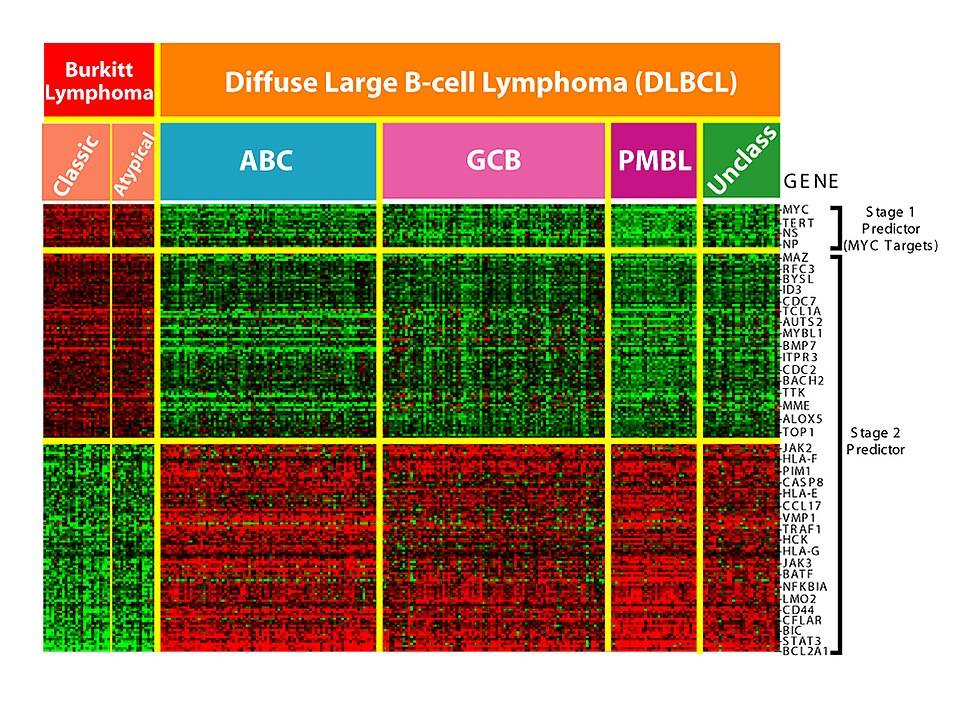
The Cancer Genome Atlas (TCGA) began in 2006 as a joint effort of the National Cancer Institute and NHGRI. It molecularly characterised over 20,000 primary cancer and matched normal samples across 33 cancer types.
Over about a dozen years, TCGA generated over 2.5 petabytes of genomic, epigenomic, transcriptomic and proteomic data. The National Cancer Institute says this data has improved the ability to diagnose, treat and prevent cancer.
In 2009, Wang, Gerstein and Snyder expected RNA-Seq to allow robust comparison between diseased and normal tissues.

6.2 How does it help study treatments?
Nature says comparing transcriptomes can identify genes that are expressed differently in response to different treatments.
6.3 How does it help explain common diseases?
GTEx says its data give a basis for interpreting many non-coding genetic variants linked to common diseases. It names heart disease, cancer, diabetes, asthma and stroke.
Sources
- National Cancer Institute, The Cancer Genome Atlas Program (TCGA)
- Wang, Gerstein and Snyder, RNA-Seq: a revolutionary tool for transcriptomics, Nature Reviews Genetics, 2009 (PMC) (card 4, again in card 6)
- Nature Portfolio, Transcriptomics (subject definition) (card 1, again in card 6)
- GTEx Portal, About Adult GTEx (card 4, again in card 6)
Exam Practice
How the exam tested it
7.1 What did UPSC ask?
UPSC asked what the term transcriptome refers to. It appeared in the Civil Services (Preliminary) Examination 2016, General Studies Paper I, as Question 31. The official Series A answer key for Question 31 matches the mRNA option, the full range of mRNA molecules expressed by an organism.
See UPSC CSP 2016 GS Paper I, Q31. View this question.
7.2 How do you reach the answer step by step?
- Step 1: rule out the editing option. Tools such as CRISPR modify DNA and are not a record of RNA.
- Step 2: rule out the process option. Gene expression is a process, not a set.
- Step 3: rule out the mutation option. A mutation is a change in DNA.
- Step 4: pick the set of mRNA molecules expressed by an organism.
7.3 Quick Q&A
Does the transcriptome change?
Gene expression changes under different conditions and cell types, NHGRI says. So the set of transcripts can differ between cells.
Which method counts RNA by sequencing it?
RNA-Seq, which Wang, Gerstein and Snyder describe.
What is the field called?
Transcriptomics, the study of the transcriptome.
Which UPSC question used the term?
Question 31 of the 2016 General Studies Paper I.
Sources
- UPSC, answer key, Civil Services (Preliminary) Examination 2016, General Studies Paper-I, Series A
- Nature Portfolio, Transcriptomics (subject definition) (card 1, again in card 7)
- NHGRI, Talking Glossary: Gene Expression (card 2, again in card 7)
- Wang, Gerstein and Snyder, RNA-Seq: a revolutionary tool for transcriptomics, Nature Reviews Genetics, 2009 (PMC) (card 4, again in card 7)
Remember this
- Exam wording: the full range of mRNA molecules expressed by an organism.
- Nature’s wider wording: the complete set of RNA transcripts produced by the genome, in a specific cell or under specific circumstances.
- Genome: the entire set of DNA instructions in a cell.
- Transcription: making an RNA copy of a gene’s DNA sequence.
- Not the answer: CRISPR-type editing, the gene expression process, or a mutation.
- Methods: microarrays and RNA-Seq.
- UPSC: CSP 2016, General Studies Paper I, Question 31.
Explain it back: Say in your own words why the transcriptome differs from the genome. Then name one way scientists measure it.
Check your understanding
This score resets when the page reloads. It is not saved to My Progress.
MCQ on the Transcriptome
Try 7 practice questions on the transcriptome, its measurement and its uses.
0 of 7 answered
Question 1 of 7
Question 2 of 7
Question 3 of 7
Question 4 of 7
Question 5 of 7
Question 6 of 7
Question 7 of 7
Leave a Reply