Sunlight doesn’t heat the atmosphere directly. It passes straight through, hits the ground, and warms the air from below, filtered the whole way by an invisible gas most people never think about.


📌 Must Know
Key Facts
- Insolation The Sun’s incoming shortwave radiation received by Earth is called insolation. It varies by latitude, season, and time of day.
- Equator vs. Poles The equator receives roughly five times the insolation the poles get, not the ten times sometimes claimed in trick options.
- Water Vapour Infrared (longwave) radiation from Earth’s surface is largely absorbed by water vapour. That vapour is concentrated in the lower atmosphere, not spread evenly through it.
- Not Visible Light Infrared waves sit just beyond red light. They are invisible to the human eye, so they are not part of the visible spectrum.
💡 Good to Know
What Controls Insolation
- Three factors control how much insolation a place receives: the angle at which sunlight strikes the surface, the length of daylight, and the atmosphere’s transparency.
- A low angle of incidence, as at the poles, spreads the same energy over a wider area. It also forces sunlight through a longer, more absorbing path of atmosphere. This is why polar regions receive far less insolation than the equator.
- The solar spectrum splits roughly into about 5% ultraviolet, 43% visible light, and 50% infrared, once it reaches Earth’s surface.
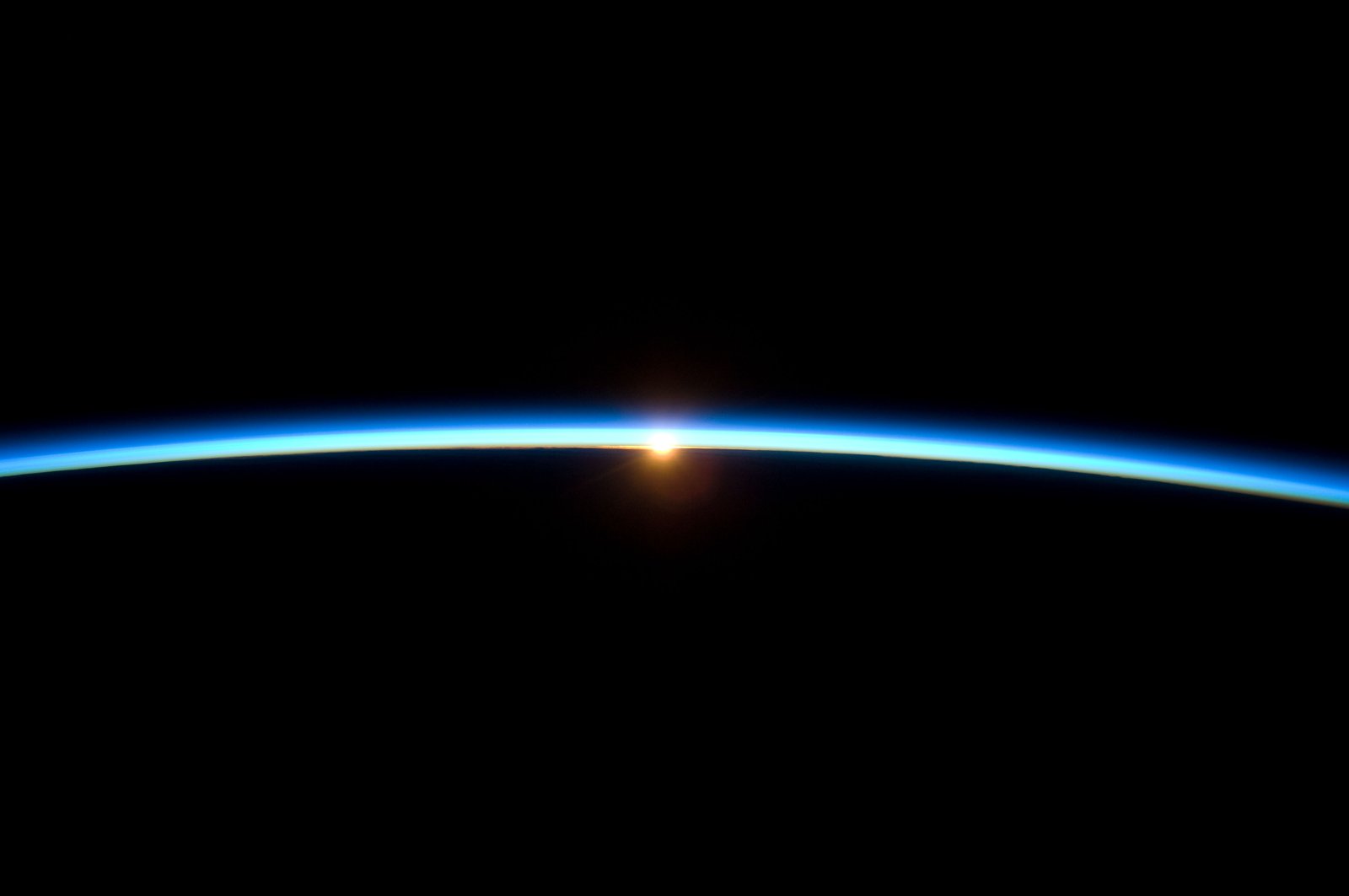
- The atmosphere itself is mostly heated indirectly. Solar radiation passes through it with little absorption and warms the ground instead. The ground then radiates longwave (infrared) heat, which the lower atmosphere absorbs.
Previous Year Question.
Asked as: “With reference to the Earth’s atmosphere, which one of the following statements is correct?” This was asked in UPSC CSP 2023, GS Paper I. View this question.
Test Yourself


🌟 Great to Know
Beyond the Basics
- This “ground-up heating” pattern is exactly why temperatures usually fall with altitude in the troposphere. Air near the surface stays closer to the heat source: the warmed ground. Air higher up receives less of that reflected infrared.
- Water vapour’s role in absorbing infrared is also the foundation of the natural greenhouse effect. It is the same basic mechanism, at a much larger scale, behind concerns about rising carbon dioxide levels.
- Cloud cover, dust, and pollution all affect atmospheric transparency. That is why heavily polluted or overcast days can trap more heat near the surface than a clear day.
- Seasonal insolation swings at high latitudes are extreme. Polar regions get continuous daylight in summer and near-total darkness in winter, on top of the low-angle effect that already reduces their yearly total.
Beyond the answer
Browse all world-geography topics →
📚 Keep reading
WorldGeo0002 — Climatology: Atmosphere, Weather and ClimateSciTech0202 — James Webb Space Telescope: The Revolutionary Infrared ObservatoryUPSC CSP 2023 — General Studies Paper I (Full Question Paper)UPSC CSP 2025 — General Studies Paper I (Full Question Paper)UPSC CSP 2024 — General Studies Paper I (Full Question Paper)❓ Practice this topic
D0095 — Where and when are small tornadoes most often reported in India?D0094 — Which statement correctly distinguishes a tornado from a tropical cyclone?D0093 — Why do the majority of the world's tornadoes form around the Gulf of Mexico?D0092 — On what basis does the Enhanced Fujita (EF) scale rate the intensity of a tornado?🎲 Take a World Geography Quiz
Leave a Reply