
Official seasons
Four, per the IMD: cold weather, hot weather, southwest monsoon, retreating monsoon.
Yearly average
About 125 cm of rain, hiding huge regional gaps.
Wettest
Mawsynram, Meghalaya — the world’s highest average yearly rainfall.
Driest
Western Rajasthan and Ladakh — under 50 cm a year.
- India’s Four Official Seasons, at a Glance
- Cold Weather Season, in Detail
- Hot Weather Season, in Detail
- Southwest Monsoon Season, in Detail
- Retreating Monsoon Season, in Detail
- What Controls India’s Climate
- ITCZ and the Monsoon’s Two Branches
- Western Disturbances: Winter’s Foreign Rain
- El Nino and La Nina’s Grip on the Monsoon
- The Indian Ocean Dipole’s Separate Effect
- Exam Point of View: Jet Streams
- Local Storms and the Six Traditional Seasons
- Rainfall Zones, From Record Wet to Bone Dry
- A Warming, Shifting Climate
- Monsoon 2026: Below Normal, and an Early Goodbye
The Official Calendar
India’s Four Official Seasons, at a Glance
- Cold weather: roughly December to February. North India stays cold and dry, while the Peninsula has almost no real winter at all.
- Hot weather: March to May. Temperatures climb steadily, reaching around 48°C in parts of the northwest by May.
- Southwest Monsoon: June to September. This brings most of India’s yearly rain. It arrives over Kerala by 1 June, then reaches Mumbai and Kolkata around 10-13 June.
- Retreating Monsoon: October to November. Rain shifts away from the north. It instead falls heavily on the Tamil Nadu coast.
Cold Weather
Dec-Feb. Cold, dry north; mild south.
Hot Weather
Mar-May. Up to 48°C in the northwest.
SW Monsoon
Jun-Sep. Bulk of India’s rain.
Retreating Monsoon
Oct-Nov. Rain shifts to the southeast.
True or False: The Southwest Monsoon usually reaches the Kerala coast by 1 June.
A Closer Look: Cold Weather
Cold Weather Season, in Detail
- When: roughly December to February, though the chill can start easing by late February in the south.
- North versus south: north India, especially Punjab, Haryana, and the Indo-Gangetic plain, gets genuinely cold. Night temperatures can drop close to freezing. The Peninsula stays mild, often still above 20°C.
- Dry, mostly: this season is dry over most of the country. But the far north can still get real winter rain or snow, thanks to Western Disturbances arriving from outside the monsoon system.
- The winter fog belt: a thick, persistent fog regularly blankets the Indo-Gangetic plain, especially Punjab, Haryana, Delhi, and Uttar Pradesh. It can delay flights and trains for hours at a stretch, most years, every winter.
- Frost risk: clear night skies let heat escape fast from the ground. This can bring frost to parts of the northwest plains, a real risk for standing winter crops.
- A trailing tail: the retreating-monsoon rain on the Tamil Nadu coast, from the season before, can still be tapering off as this cold season begins.
A Closer Look: Hot Weather
Hot Weather Season, in Detail
- When: March to May, building steadily hotter as the season goes on. May is usually the peak.
- Where it bites hardest: the northwest plains and the interior Peninsula see the sharpest heat. Parts of Rajasthan can cross 48-50°C by May, among the hottest spots anywhere in the country.
- What counts as a heat wave: the IMD sets two triggers. A place hits at least 40°C on the plains. Or it runs 4.5°C above its own normal for that date. Coastal areas stay milder all season, cooled by the nearby sea.
- Dust storms: north India can see sudden dust storms, locally called andhi, as dry, hot air masses collide. These can drop visibility sharply within minutes.
- Nor’westers: Bengal and Assam get violent evening thunderstorms in this season too, known locally as Kalbaisakhi and Bardoisila. See the local storms card below for both.
- Pre-monsoon showers: Kerala and coastal Karnataka get the mango shower and blossom shower in this same window, both covered in the local storms card too.
- Hill stations fill up: this heat is exactly why hill towns like Shimla, Darjeeling, and Ooty became popular summer retreats in the first place, and still are today.
Think it through. Why do coastal cities like Mumbai or Chennai rarely see the same extreme heat as inland cities like Delhi or Nagpur, even at a similar latitude?
Show the explanation
The sea heats up and cools down far more slowly than land. A coastal city sits right next to that huge, slow-changing store of moderate heat. A daily sea breeze also keeps pulling in cooler, more humid air off the water. An inland city has no such moderating neighbour. Its land bakes and heats up fast under the sun. Nothing nearby cools the air down, so temperatures swing far higher.
True or False: The IMD can declare a heat wave even below 40°C, if the temperature is far enough above normal for that date.
A Closer Look: The Southwest Monsoon
Southwest Monsoon Season, in Detail
- When: June to September, India’s main rainy season by far. See the ITCZ and branches card above for how it actually arrives and splits across the country.
- A day-by-day advance: the monsoon doesn’t hit all of India at once. It usually reaches Kerala around 1 June, Mumbai around 10 June, Kolkata around 10-13 June, and Delhi only by late June or early July.
- The “burst”: the monsoon’s arrival at any one place is often sudden, not gradual, a real shift from dry heat to heavy rain within a day or two. This sudden burst links to the jet-stream mechanics in the Exam Edge card below.
- Peak and taper: July usually brings the heaviest nationwide rain. Rain gradually eases through August and September as the season winds down.
- Breaks happen: as covered above, rain can pause for a week or more even in the middle of this season, without the monsoon actually ending.
A Closer Look: The Retreating Monsoon
Retreating Monsoon Season, in Detail
- When: October and November, as the Southwest Monsoon pulls back out of India.
- Where it starts: withdrawal usually begins from Rajasthan and the northwest around early September, then moves south and east over the following weeks.
- October heat: once the rain-bearing clouds clear out but before winter cold sets in, humidity and daytime heat can spike again briefly. This spell is often called “October heat.”
- A second monsoon starts: as the Southwest Monsoon exits, the Northeast Monsoon picks up over the Tamil Nadu coast and nearby areas. It brings that region’s own main rainy spell.
- Cyclone risk climbs: this same window is also a peak cyclone season in the Bay of Bengal. See the rainfall zones card below for the deltas most exposed to it.
What Controls the Climate
What Controls India’s Climate
- Latitude: the Tropic of Cancer cuts India in half. The south stays warm all year. The north sees much bigger swings in temperature.
- The Himalayas: this mountain wall blocks cold winds blowing down from Central Asia. It also traps monsoon winds, forcing them to drop their rain inside the subcontinent.
- Distance from the sea: coastal areas like Mumbai barely feel any seasonal extremes. Inland cities like Delhi and Amritsar swing between very hot and very cold.
- Altitude and relief: height cools the air. Darjeeling stays far colder than Agra even on the same latitude. Mountains also decide rainfall: windward slopes get heavy rain, while the leeward side stays dry.
Worked example: picture the same latitude, two different results. Agra, on the flat plains, bakes in summer heat. Darjeeling, high in the hills at a similar latitude, stays cool enough for tea gardens. Height, not latitude, makes the real difference here.
True or False: The Himalayas both block cold winter winds and trap monsoon rain inside India.
How the Monsoon Actually Arrives
ITCZ and the Monsoon’s Two Branches
- ITCZ: the Inter-Tropical Convergence Zone is a low-pressure belt where trade winds meet. In July it shifts north over the Gangetic plain, pulling in the monsoon.
- Two branches: the monsoon reaches India as two separate branches. One comes from the Arabian Sea. The other comes from the Bay of Bengal.
- The Arabian Sea branch: this branch itself splits three ways. One part hits the Western Ghats head-on, dumping 250-400 cm of rain on the windward side. A second part follows the Narmada-Tapi valleys inland. A third crosses Saurashtra and Kachchh, then fades over the Aravallis.
- The Bay of Bengal branch: this branch strikes Myanmar’s coast first, then bends back into India. It splits again too. One part moves west along the Ganga plains. The other climbs the Brahmaputra valley and slams into the Khasi and Garo hills.
- A break in the monsoon: rain can stop for a week or more even during the rainy season. This dry spell is called a “break.” It happens for different reasons on the west coast versus the north.
Rain From Far Away
Western Disturbances: Winter’s Foreign Rain
- Not the monsoon at all: some of north India’s winter rain and hill snow comes from a totally different system. It’s called Western Disturbances.
- Where they start: these are storm systems. They form far away, near the Mediterranean Sea. Then they travel roughly 9,000 km east.
- Why it matters: this winter rain and snow really helps north India’s wheat crop. That crop depends on this moisture landing at just the right time.
Think it through. If the Southwest Monsoon has already withdrawn by winter, what’s actually watering north India’s wheat fields in December and January?
Show the explanation
It’s not the monsoon at all. Western Disturbances are storm systems. They are born far away, near the Mediterranean Sea. They travel roughly 9,000 km east, and bring occasional winter rain and Himalayan snow to north India. Farmers actually depend on this separate, foreign weather system, not the monsoon. It waters their winter wheat crop at just the right growth stage.
A Pacific Ocean Effect on India
El Nino and La Nina’s Grip on the Monsoon
- A distant trigger: El Nino and La Nina are shifts in Pacific Ocean heat. They happen thousands of kilometres away. Yet they still reach into India’s own monsoon strength.
- El Nino’s effect: El Nino years are statistically more likely to bring a weaker, below-normal Indian monsoon.
- La Nina’s effect: La Nina years tend to favour a stronger, closer-to-normal or above-normal monsoon instead.
- Not a sure thing: this link is called a teleconnection. It raises or lowers the odds. It doesn’t fix the outcome every single year.
True or False: El Nino years are statistically linked to a weaker Indian monsoon.
A Second, Closer Ocean Effect
The Indian Ocean Dipole’s Separate Effect
- A different ocean: the Indian Ocean Dipole, or IOD, is a separate temperature pattern. This one sits in the Indian Ocean itself, not the Pacific.
- Two phases: a positive IOD phase, with the western Indian Ocean warmer than the east, tends to boost India’s monsoon rainfall. A negative IOD phase tends to work against it.
- Working together or against: a positive IOD can sometimes soften a weak-monsoon El Nino year. A negative IOD can instead make that same weak year worse. Forecasters watch both patterns together, not just one alone.
Exam Point of View: Jet Streams
- The pattern: jet-stream questions test one specific number or season against your gut instinct. Learn each fact as a paired fact, not two separate ones.
- SSC CGL 2024 Asked at what latitude the easterly jet stream blows over peninsular India in summer. Answer: 14°N. This is the jet stream that helps trigger the monsoon’s sudden “burst.” View SSC CGL 2024 Paper →
- CDS I 2017 Asked which statement about jet streams was NOT correct. The trap: the polar front jet is actually strongest in winter, not summer, when it wrongly seems to make more intuitive sense. View CDS I 2017 Paper →
Named Local Weather
Local Storms and the Six Traditional Seasons
- Mango shower: pre-monsoon rain hits Kerala and coastal Karnataka in late summer. Locals call it the mango shower, since it helps mangoes ripen early.
- Blossom shower: a similar pre-monsoon shower in Kerala. It triggers coffee flowers to blossom.
- Nor’westers: violent evening thunderstorms in Bengal and Assam. Bengal calls them “Kalbaisakhi.” Assam calls the same storm “Bardoisila.”
- Loo: a hot, dry wind in summer. It blows across the northern plains, from Punjab down to Bihar. It is strongest between Delhi and Patna, often lasting into the night.
- Six traditional seasons: Indian tradition splits the year into six two-month seasons: Vasanta, Grishma, Varsha, Sharada, Hemanta, and Shishira. This calendar fits north India well, but doesn’t really apply to the south, where seasons barely change.
True or False: The classical six-season Hindu calendar (Vasanta, Grishma, and so on) is simply another name for the IMD’s four official seasons.
Where the Rain Actually Falls
Rainfall Zones, From Record Wet to Bone Dry
- India’s average: India gets about 125 cm of rain a year on average. This one number hides huge regional gaps.
- Wettest zone: the west coast, the Western Ghats, and the hills of Meghalaya all get over 200 cm a year. Mawsynram, in the Khasi Hills, holds the world record for average yearly rainfall, at around 11,872 mm.
- Driest zones: western Rajasthan, Ladakh, and parts of the interior Peninsula get under 50 cm a year. That’s barely a third of the national average.
- Retreating-monsoon cyclones: October and November bring cyclones from the Andaman Sea that cross the southern Peninsula’s east coast. The crowded deltas of the Godavari, Krishna, and Kaveri are their favourite, most damaging targets.
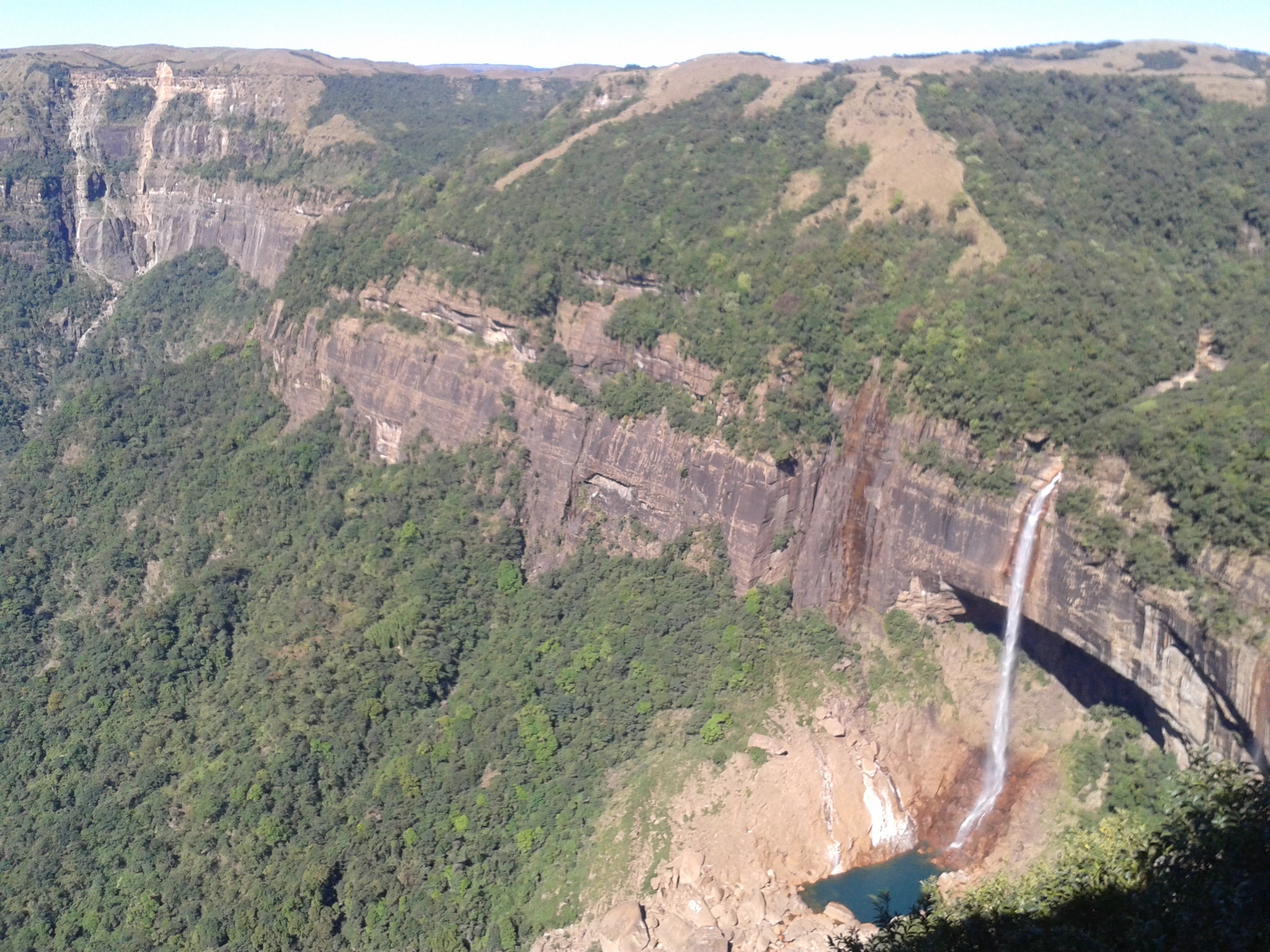
True or False: Mawsynram, in Meghalaya, holds the world record for average yearly rainfall.
A Climate Already Changing
A Warming, Shifting Climate
- Rising temperatures: India’s average temperature has risen clearly over the past century. It’s part of the same global warming trend affecting the whole planet.
- Fewer rainy days, heavier bursts: data shows fewer total rainy days each year now. But more of that rain falls as extremely heavy single-day bursts. Total rain isn’t falling any more gently.
- Real consequences: this shift makes both drought and sudden flooding more likely in the same regions, sometimes in the same year.
- A changing baseline: the IMD itself updates its climate benchmark roughly once a decade. Its most recent update covers the 1971-2020 period, since an older baseline can drift out of date as the climate itself shifts.
Monsoon 2026: Below Normal, and an Early Goodbye
Monsoon 2026: Below Normal, and an Early Goodbye
- A cautious start: on 13 April 2026, the IMD issued its first-stage forecast. It put the coming Southwest Monsoon at about 92% of the long-period average, a below-normal outlook. (Source: Hindustan Times)
- Revised down further: on 29 May 2026, the IMD lowered that forecast again, to about 90% of the long-period average. It pointed to developing El Nino conditions in the Pacific. (Source: Hindustan Times)
- An early exit: the Southwest Monsoon left Delhi on 23 September 2026, two days early. This was the capital’s earliest exit since 2002 — 24 years earlier. (Source: Hindustan Times)
- Why it matters here: the below-normal forecast and the early withdrawal are both live examples. They show exactly the seasonal mechanics and El Nino link this article explains above.
Quick Q&A
Q: What are India’s four official seasons?
A: Cold weather (Dec-Feb), hot weather (Mar-May), the Southwest Monsoon (Jun-Sep), and the Retreating Monsoon (Oct-Nov).
Q: What are the monsoon’s two main branches?
A: One from the Arabian Sea, which itself splits three ways, and one from the Bay of Bengal, which splits into two.
Q: What brings north India’s winter rain, if the monsoon has already withdrawn?
A: Western Disturbances — storm systems that travel roughly 9,000 km east from near the Mediterranean Sea.
Q: Where does the easterly jet stream blow over peninsular India in summer, and why does it matter?
A: At 14°N — it’s the jet stream that helps trigger the monsoon’s sudden “burst,” a real SSC CGL 2024 exam question.
✅ Test Yourself
Loading practice…
Beyond the answer
Browse all indian-geography topics →
📚 Keep reading
IndGeo0121 — Andaman and Nicobar Islands: ClimateWorldGeo0011 — The Indian Monsoon: Mechanism and DriversIndGeo0062 — Western Disturbances: A 9,000km Journey to a Wheat FieldIndGeo0054 — El Niño, La Niña and the Indian MonsoonIndGeo0072 — Rainfall Pattern and Distribution of India❓ Practice this topic
C7020 — With reference to the climate of Andaman and Nicobar Islands, which of the following statements is/are correct?<br /> 1. The climate can be defined as a humid, tropical coastal climate.<br /> 2. It receives rainfall from both South-west monsoon and North-east monsoon.<br /> 3. Maximum precipitation is between December and May. <b>[UPSC CSP 2026, GS Paper I]</b>D2124 — NCERT Class 6 Geography: India's climate is broadly of the monsoon type. What does the word 'monsoon' mean and how does climate differ from weather?C8377 — Which of the following statements about westerlies and winter rain in North-Western India is/are correct? 1. Westerlies blow between 30 degrees N and 60 degrees S latitudes throughout the year. 2. The moist air masses that cause winter rains in North-Western India are part of westerlies.A3263 — Rainfall in Jharkhand is primarily attributed to which monsoon system?🎲 Take a Indian Geography Quiz
Leave a Reply