The human body runs on several interconnected systems. Knowing what each one does is basic science literacy, useful well beyond any exam.
 MCQ Questions
General Science
Five Body Systems, Five Core Jobs
Pump
Circulatory
Core JobDelivers oxygen and nutrients everywhere
Key FactVessel walls make nitric oxide to widen blood flow
Exchange
Respiratory
Core JobSwaps oxygen in for carbon dioxide out
Key FactRibs rise and diaphragm drops to pull air in
Breakdown
Digestive
Core JobTurns food into nutrients the body can use
Key FactFive steps: ingestion to egestion, glands feed in bile and enzymes
Command
Nervous
Core JobCoordinates the body’s responses to signals
Key FactA reflex arc bypasses the brain entirely for speed
Support and Move
Skeletal and Muscular
Core JobGives structure and enables movement
Key Fact206 adult bones, down from about 305 at birth, moved by muscles that only pull
None of these work alone
The nervous and endocrine systems jointly run the body’s stress response, and the circulatory system carries what the digestive and respiratory systems take in. Exam questions often test this overlap, not just one system in isolation.
Must Know
Core Systems
Five Foundational Systems
- Circulatory Centred on the heart, this system pumps blood to deliver oxygen and nutrients throughout the body.
- Respiratory Centred on the lungs, this system exchanges oxygen and carbon dioxide between the body and the air.
- Digestive Breaks down food into nutrients the body can absorb and use for energy and growth.
- Nervous Including the brain and spinal cord, this system coordinates the body’s responses to internal and external signals.
- Neuron Structure A neuron receives signals through its dendrites, carries them along its axon, and passes them across a tiny gap called the synapse to the next neuron.
- Reflex Arc A reflex arc is the fast, automatic path a signal takes from receptor to spinal cord to muscle, bypassing the brain entirely, as in pulling a hand back from a hot object.
- Three Brain Regions The cerebrum handles thinking, memory, and voluntary action. The cerebellum manages balance and coordination. The medulla controls involuntary actions like breathing and heartbeat.
- Skeletal & Muscular Together, these provide the body’s structural support and enable physical movement.
- Four Animal Tissue Types Epithelial tissue covers and lines surfaces. Connective tissue, like bone, blood, and fat, binds and supports other tissues. Muscular tissue contracts to produce movement. Nervous tissue carries electrical signals throughout the body.
Good to Know
Regulatory and Defensive Systems
Endocrine, Immune, and Excretory
- Endocrine Uses hormones to regulate processes like growth, metabolism, and mood across the body.
- Pituitary: The Master Gland The pituitary gland, attached to the brain, secretes growth hormone and directs other glands like the thyroid, adrenals, testes, and ovaries to release their own hormones.
- Thyroid and Pancreas The thyroid secretes thyroxine; too little causes goitre, a swollen throat. The pancreas secretes insulin; too little causes diabetes.
- Adrenal Glands The adrenal glands maintain the body’s salt balance and release adrenaline, which readies the body to respond to stress, fear, or anger.
- Sex Hormones and Secondary Characters At puberty, testosterone from the testes and estrogen from the ovaries trigger secondary sexual characters, like facial hair in boys and breast development in girls.
- Sex Determination A baby’s sex depends on whether the fertilising sperm carries an X or a Y chromosome, since every egg carries only an X. This means the father’s sperm determines the child’s sex, not the mother.
- Menstrual Cycle The menstrual cycle repeats roughly every 28 to 30 days, from menarche (the first cycle at puberty) to menopause (the cycle’s end around 45-50 years).
- Immune Defends the body against pathogens, including bacteria, viruses, and other harmful invaders.
- Excretory Including the kidneys, this system removes waste products and maintains the body’s internal chemical balance. The kidneys, ureters, bladder, and urethra together form it.
- Excretory Products Differ by Animal Humans and other mammals excrete urea. Birds, lizards, and snakes excrete uric acid, a semi-solid white compound that saves water. Fish simply release ammonia straight into the surrounding water.
- The Nephron The nephron is the kidney’s basic filtration unit. Blood enters a cluster of capillaries called the glomerulus, which sits inside a cup-shaped Bowman’s capsule that collects the filtered fluid.
- Dialysis Dialysis artificially filters a patient’s blood using a machine when the kidneys fail, removing waste products the kidneys can no longer clear on their own.
B Cells and T Cells: The Adaptive Immune System
- B Cells B cells make antibodies. These antibodies target and neutralize specific pathogens circulating in the body.
- T Cells T cells detect and destroy body cells that are already infected, such as by a virus.
- Core Role Together, B and T cells protect the body from diseases caused by pathogens. This is their main job, not allergy control or pain relief.
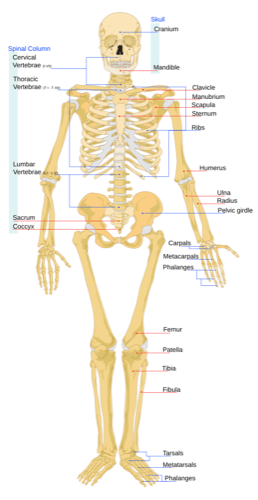
The Skeleton: Bone Count, Joints, and Cartilage
- Bone Count A newborn has about 305 bones. Many fuse together during growth, leaving an adult with 206 bones.
- Ball and Socket Joint A rounded bone end fits into another bone’s hollow cavity. This allows movement in every direction, as at the shoulder and hip.
- Pivotal Joint A cylindrical bone rotates within a ring, as where the skull meets the neck. It allows turning the head side to side, not full rotation.
- Hinge Joint This allows movement in only one plane, back and forth, like a door hinge. The elbow and knee are classic examples.
- Fixed Joint Bones at a fixed joint cannot move at all, as between the skull’s upper jaw and the rest of the head.
- Rib Cage and Backbone Twelve pairs of ribs form the rib cage, protecting the heart and lungs. The backbone itself is made of 33 small bones called vertebrae.
- Cartilage Cartilage is softer than bone but firmer than ordinary tissue, found in the ear and at many joints. Muscles move bones by contracting in pairs, since a muscle can only pull, never push.

The Digestive System: Path, Glands, and Products
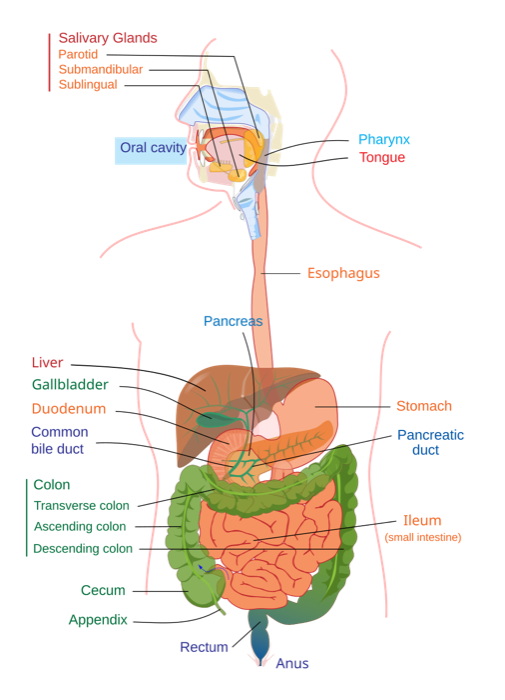
- The Five Steps Nutrition proceeds in five stages: ingestion, digestion, absorption, assimilation, and egestion.
- The Alimentary Canal Food travels through the buccal cavity, oesophagus, stomach, small intestine, and large intestine, ending at the rectum and anus.
- Three Digestive Glands Salivary glands, the liver, and the pancreas all release digestive juices into this canal, without being part of the canal itself.
- Bile’s Role The liver produces bile, stored in the gall bladder, which breaks large fat droplets into smaller ones for easier digestion.
- Villi The small intestine’s inner wall is lined with finger-like villi, which vastly increase surface area for absorbing digested food into the blood.
- What Each Nutrient Becomes Digestion breaks carbohydrates into simple sugars, proteins into amino acids, and fats into fatty acids and glycerol.
- Ruminants Cattle and deer store swallowed grass in a stomach chamber called the rumen, where bacteria digest cellulose. The partly digested cud is later rechewed, a process called rumination.
- Four Types of Teeth Incisors cut and bite, canines pierce and tear, and premolars and molars chew and grind food.

Respiration: Aerobic, Anaerobic, and Breathing Mechanics
- Aerobic Respiration Aerobic respiration breaks glucose down using oxygen, releasing carbon dioxide, water, and energy. It happens in the cells of most organisms, most of the time.
- Anaerobic Respiration Anaerobic respiration breaks glucose down without oxygen. Yeast does this to produce alcohol and carbon dioxide, while human muscle cells do it briefly to produce lactic acid.
- Lactic Acid and Cramps Heavy exercise can outpace the oxygen supply to muscles, forcing them into anaerobic respiration. The lactic acid this produces builds up and causes muscle cramps.
- Breathing Mechanics During inhalation, the ribs move up and out while the diaphragm moves down, enlarging the chest cavity so air rushes in. Exhalation reverses both movements, shrinking the cavity and pushing air out.


Test Yourself
Loading practice…
Great to Know
Systems Working Together
Interaction, Practical Value, and Nitric Oxide
- Interaction These body systems don’t function in isolation. They constantly interact, such as the nervous and endocrine systems jointly regulating stress responses.
- Practical Value Understanding basic body-system function supports informed decisions about diet, exercise, and recognizing early warning signs of illness.
- Disease Insight Many diseases specifically target one system’s function, which is why understanding normal system operation helps clarify how a given illness disrupts the body.
- Nitric Oxide The circulatory system relies on more than just the heart’s pumping action. The vessel walls themselves synthesise nitric oxide, a signalling molecule that relaxes smooth muscle in the vessel wall. This dilates blood vessels and increases blood flow, helping regulate blood pressure.
📝 Exam Point of View
Exam Point of View
- UPSC CSP 2022, Q97B cells and T cells are best described by their core job: protecting the body from diseases caused by pathogens — not allergy control, not pain relief. View this question on the full UPSC CSP 2022 paper →
- UPSC CSP 2024, Q33Nitric oxide, made by the vessel walls themselves, is what dilates blood vessels and increases blood flow — a detail beyond just “the heart pumps blood.” View this question on the full UPSC CSP 2024 paper →
- The PatternBody-systems questions often go one layer deeper than “which organ does what” — testing the specific molecule or cell type responsible for a named effect.
Related Topics
- GenSci0003 — Biology Fundamentals for Competitive Exams — the broader biology fundamentals this article’s body-systems detail builds on.
- UPSC CSP 2024 GS Paper I — contains the nitric oxide PYQ cited above.
- UPSC CSP 2022 GS Paper I — contains the B cells/T cells PYQ cited above.
- Browse all General Science articles
Beyond the answer
Browse all general-science topics →
📚 Keep reading
GenSci0003 — Biology Fundamentals for Competitive ExamsSciTech0205 — Vaccine Development: Principles, Mechanism and India's COVID-19 ApproachGenSci0052 — Cell Structure and OrganellesUPSC CDS (I) 2018 — General Knowledge (Full Question Paper)SciTech0134 — Genetic Medicine: How Gene Therapy Works❓ Practice this topic
D4452 — In India, the alternating current supplied to homes reverses its direction at a frequency of how many hertz?D4451 — What is the role of the split ring in a simple electric motor?D4450 — Inside a current-carrying solenoid, the magnetic field lines run as parallel straight lines. What does this indicate about the field?D4449 — In an electric motor, which rule gives the direction of the force acting on a current-carrying coil placed in a magnetic field?🎲 Take a General Science Quiz
Leave a Reply