Technology shapes ordinary daily life more than almost any grand policy. This article covers health, connectivity and sustainability.
Health: From Telemedicine to Uneven Adoption
Health
- AdvancesAdvances in medical science and pharmaceuticals have improved diagnosis, treatment and prevention.
- LongevityThis has extended life expectancy significantly over the past century.
- DigitalDigital tools now support diagnosis and treatment, from telemedicine to AI-assisted screening.
Telemedicine and Digital Health, and Uneven Health Tech Adoption
- eSanjeevaniIndia’s eSanjeevani platform provides free online doctor consultations, extending healthcare to rural areas.
- Origin StoryeSanjeevani launched on 13 April 2020, during India’s first COVID-19 lockdown, when hospital outpatient departments across the country had shut their doors. It handled just 1.2 crore consultations in its first year. By June 2026 it had crossed 48 crore consultations, with over 2.3 lakh healthcare providers on the platform.
- AIArtificial intelligence assists diagnosis, from reading scans to clinical decision support.
- ReachTelemedicine bridges the urban-rural gap in access to specialists.
- GapHealthcare technology adoption is uneven across India.
- UrbanAdvanced diagnostic and treatment tools are concentrated in urban centres more than rural areas.
Connectivity: From Aadhaar to Mobile Leapfrogging
Connectivity
- ComputersComputers and mobile phones have transformed how people communicate and access information.
- AutomationOffice automation, from word processing to workflow software, has changed routine administrative work.
- InternetAffordable mobile data and the Digital India push have widened internet access dramatically.
- Origin StoryThe government set up UIDAI in January 2009 to issue Aadhaar. Infosys co-founder Nandan Nilekani left the company to lead it as its first chairperson. The very first Aadhaar number went to Ranjana Sonawane, a tribal woman from Tembhli village in Maharashtra’s Nandurbar district, on 29 September 2010. Prime Minister Manmohan Singh handed it to her in person.
IT in Schools, and Mobile Leapfrogging, and A Leapfrogging Pattern
- ToolsIT in schools, like computers, digital tools and internet access, widens access to educational resources.
- ReachThis goes beyond what a physical classroom alone can offer.
- PhonesThe rapid spread of mobile phones, more than computers, has been a defining feature of India’s digital story.
- SkipMobile networks let many Indians skip the fixed-line internet stage entirely and connect for the first time through a phone.
- PatternThe combined effect of IT in schools, mobile connectivity and healthcare technology is sometimes summarized as a ‘leapfrogging’ pattern.
Sustainability: Appliances, EVs and Renewables
Sustainability
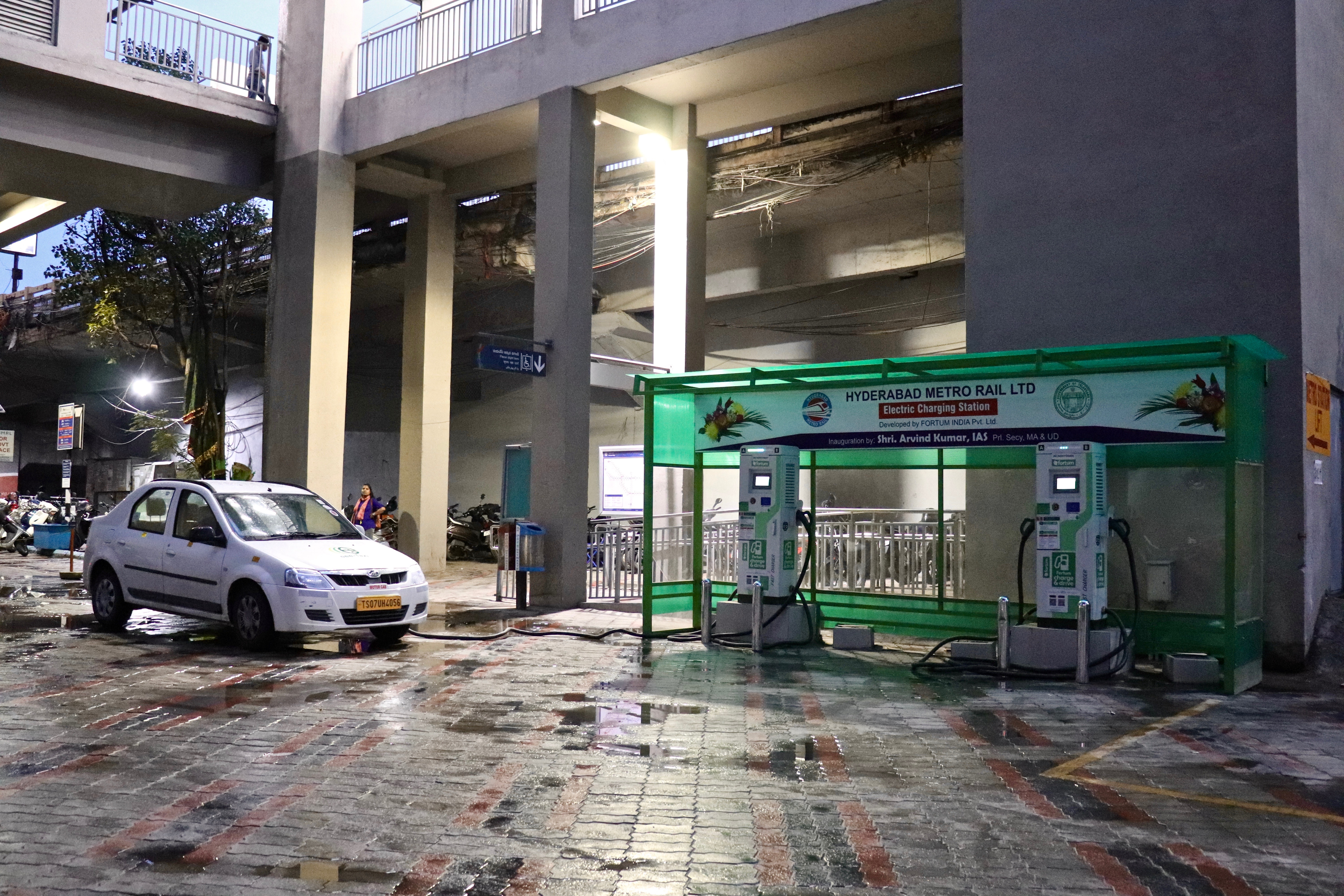
- VehiclesLow-pollution vehicle fuels, including battery-operated vehicles, aim to cut air pollution from petrol and diesel engines.
- ApplianceDomestic appliances have reduced the time households spend on chores.
- RenewablesClean-energy alternatives cut both pollution and long-term energy costs.
Domestic Appliances, and The True Impact of EVs, and Renewables at Scale
- TimeAppliances like refrigerators and washing machines have measurably reduced chore time.
- EnergyEco-friendly energy alternatives cut both pollution and long-term energy costs.
- ShiftBattery-operated vehicles shift emissions from the tailpipe to wherever the electricity was generated.
- GridTheir true environmental benefit depends on how clean that underlying electricity source is.
- GrowthIndia’s renewable energy capacity has grown fast, crossing 300 GW on its way to the 500 GW target by 2030.
- DriversFalling solar costs and policy support drive the transition.
✅ Test Yourself
Loading practice…
Exam Point of View
Digital India and Aadhaar: Know What the Scheme Actually Does
- QuestionUPSC CSP 2018 tested Digital India’s real aims (Q36) and what Aadhaar’s open APIs actually allow (Q17).
- WhyBoth questions punish a reader who only knows the scheme’s name. Digital India’s genuine aim is connecting villages and public places to Wi-Fi. Building Indian internet giants or luring foreign data centres are both plausible-sounding traps, not the real aim. Aadhaar’s open APIs do let it plug into any device and support iris-based authentication.
- LinkUPSC CSP 2018, Q36 (Digital India) and UPSC CSP 2018, Q17 (Aadhaar APIs).
Ayushman Bharat Digital Mission: Voluntary, Not Mandatory, and Electric Vehicles: Prelims Wants the Chemistry, Not Just the Concept, and Mains: Smart Cities and Everyday Tech Recur on GS-I and GS-III
- QuestionUPSC CSP 2022 (Q19) asked whether hospitals must adopt the Ayushman Bharat Digital Mission and whether every citizen ends up covered.
- WhyThe trap is overstatement: hospital adoption is voluntary, not mandatory, and individual enrolment is opt-in rather than a guarantee of universal coverage. Only the mission’s genuine design goal — seamless portability of health records across the country — is actually correct.
- LinkUPSC CSP 2022, Q19 (Ayushman Bharat Digital Mission).
- QuestionUPSC CSP 2024 (Q37) asked what actually comes out of a fuel-cell electric vehicle’s exhaust. UPSC CSP 2025 (Q43) asked which specific elements make up an EV battery’s cathode.
- WhyBoth move past “EVs are clean” into the real mechanism. A hydrogen fuel cell’s only exhaust is water vapour. An EV cathode is typically lithium, cobalt and nickel — graphite is the anode material, a common distractor.
- LinkUPSC CSP 2024, Q37 (FCEV exhaust) and UPSC CSP 2025, Q43 (EV battery cathode).
- QuestionGS Mains has asked about the Smart City Programme’s objectives and equity impact, in 2016 and 2025. It has also asked about everyday technology’s social effect, such as mobile phones replacing in-person interaction (2023).
- WhyExaminers want an answer that weighs both sides, not just a list of features. That means a smart city’s efficiency gains against whether poorer residents actually benefit, or a technology’s convenience against what it displaces in daily life.
- In practiceStructure a Mains answer on this theme around who benefits and who is left out, not just what the technology does.
📰 Current Affairs
Electric Vehicle Push
- GrowthIndia’s EV sales have grown steadily, supported by schemes like FAME and the PM E-DRIVE programme.
- NumbersPM E-DRIVE has a ₹10,900 crore outlay (October 2024 to March 2028) and supported over 1.13 million EVs in its first year. EV penetration reached 8.5% of new vehicle sales in FY26.
- GoalThe push aims to cut urban air pollution and oil-import dependence.
- SourcePIB — PM E-DRIVE Scheme: Electric Vehicle Sales Soar.
Renewable Energy Milestone
- CapacityIndia’s non-fossil power capacity crossed 300 GW in July 2026, about 60% of the 500 GW non-fossil target for 2030. India now ranks third in the world for renewable energy installed capacity.
- SolarSolar leads the expansion, with falling costs making it competitive with coal.
- SourcePIB — India Ranks Third Globally in Renewable Energy Installed Capacity.
Beyond the answer
Browse all science-and-technology topics →
📚 Keep reading
Polity0119 — UIDAI (Aadhaar)IndGov0022 — Digital IndiaIndGov0019 — Mobile Governance and e-Governance Success Stories in IndiaPolity0010 — Cyber Security Basics and India's FrameworkPolity0105 — Right to Privacy and the Puttaswamy Judgment❓ Practice this topic
C8034 — Consider the following types of vehicles: 1. Full battery electric vehicles 2. Hydrogen fuel cell vehicles 3. Fuel cell-electric hybrid vehicles How many of the above are considered as alternative powertrain vehicles? <b>[UPSC CSP 2025]</b>B1708 — Which mobile technology is recognised as the fourth-generation (4G) mobile service by the International Mobile Telecommunications standard?D0176 — Consider the following statements: 1. The Information Technology Act, 2000 gives digital signatures legal recognition equal to handwritten signatures. 2. India's eSign service lets citizens digitally sign documents online using Aadhaar-based authentication, without a separate hardware token. 3. A digital signature is typically used as proof of identity to log into internet servers. Which of the statements given above is/are correct?D0123 — S-400 Air Defence System: UPSC Mains 2021 GS3 Q5🎲 Take a Science And Technology Quiz
Leave a Reply